By Kulmeet Kundlas MD, Board-Certified Internal Medicine — Shield Medical Group, Sebring and Lake Wales, Florida
Two or three times a day, a patient asks me the same question when we review their blood work:

“Doctor, what are the prediabetes symptoms I should watch for?” Here is the honest answer most patients never hear — prediabetes has no direct symptom. It is silent. But your body does leave clues, and if you know where to look, you can catch it early and reverse it.
In this article I will walk you through what prediabetes actually is, how insulin resistance quietly damages your metabolism, the seven warning signs that suggest you may be prediabetic, and what you can do to put it into remission before it becomes type 2 diabetes.
What Prediabetes Really Means
Prediabetes is the stage where your blood sugar is higher than normal, but not yet high enough to be called diabetes. It is a warning that your body is losing the ability to handle glucose, and it is driven by insulin resistance.
People often expect a specific symptom, like a rash or a pain. There isn’t one. Symptoms imply you walked into a clinic with a complaint. Nobody walks into my office saying, “I feel prediabetic.” You come in for something else, or your annual blood work picks it up. That is precisely why it is dangerous — it hides until real damage begins.
According to the Centers for Disease Control and Prevention, more than 1 in 3 American adults have prediabetes, and most of them don’t know it. That is the real problem. Silent doesn’t mean harmless.
How Insulin Resistance Works
Think of insulin as a key. Your cells have locks called insulin receptors. When insulin binds to those receptors, the door opens and glucose walks into the cell to be used for energy. In insulin resistance, the lock becomes sticky. Sometimes it opens, sometimes it doesn’t. Sugar starts backing up in your bloodstream.
Four organs work together to control your blood sugar:
- Pancreas — the factory that produces insulin
- Liver — stores glucose and releases it when you fast
- Muscle — the biggest sink for glucose after meals
- Visceral fat — the fat around your organs, which drives inflammation
The sugar in your blood comes from two places. First, what you eat. Second, what your liver makes by breaking down stored glycogen and converting protein into glucose. This is a survival system so your brain never runs out of fuel. But when the liver becomes insulin resistant, it keeps pumping out glucose even when it shouldn’t. That is why fasting sugars rise first in most people.
What happens in each organ
- Liver: Ignores insulin’s signal to stop making glucose. Your fasting sugar climbs.
- Muscle: Stops pulling sugar out of the blood efficiently. Your post-meal sugar stays high for hours.
- Visceral fat: Releases inflammatory chemicals and free fatty acids that make insulin resistance worse.
- Pancreas: Compensates by pumping out more insulin, which works for a while, until it eventually tires out.
How Prediabetes Is Diagnosed
Diagnosis is not based on how you feel. It is based on blood work. According to the American Diabetes Association, any of the following puts you in the prediabetes range:
- Fasting blood glucose: 100 to 125 mg/dL
- Hemoglobin A1C: 5.7% to 6.4%
- Oral glucose tolerance test (2-hour value): 140 to 199 mg/dL
If your numbers cross those upper limits, you are no longer prediabetic — you have type 2 diabetes. To understand what A1C actually measures and why it matters, read our companion article on what your A1C really measures.
7 Warning Signs Your Body May Be Giving You
You will not “feel” prediabetes the way you feel a cold. But your body does whisper. Here are the seven clues I look for in the exam room.

1. Your Waist Is Growing
An expanding waistline is the single most useful clue I see in clinic. It reflects visceral fat — the fat wrapped around your liver, pancreas, and intestines. That fat is not passive storage. It is metabolically active, and it releases inflammatory chemicals and free fatty acids into your bloodstream. The result is a worsening cycle: more visceral fat leads to more inflammation, more insulin resistance, and higher blood sugar.
A rough clinical target for adults is a waist circumference under 40 inches for men and under 35 inches for women. If your belt keeps loosening in the wrong direction, take it seriously.
2. Dark, Velvety Patches on Your Skin
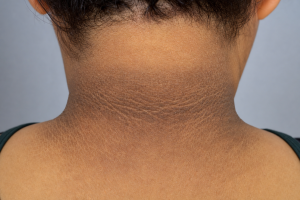
This is called acanthosis nigricans. You will see it on the back of the neck, in the armpits, or in the groin. The skin looks dirty even after scrubbing, feels thick and velvety, and often has small skin tags nearby. It is not a hygiene problem. It is a walking billboard for insulin resistance.
When your muscles, liver, and fat resist insulin, the pancreas compensates by producing more of it. High insulin levels stimulate skin cells called keratinocytes and fibroblasts to multiply, which creates those dark, thickened patches. If you see this on your neck or armpits, ask your doctor to check your fasting glucose and A1C.
3. Constant Fatigue That Doesn’t Match Your Sleep
Blood sugar that spikes and crashes will wear you out. You feel tired after meals, sluggish in the afternoon, and never quite rested even after a full night in bed. Insulin resistance also raises your risk of sleep apnea, poor sleep quality, and low mood, which pile onto the fatigue.
Yes, many things cause fatigue — thyroid disease, anemia, depression, sleep apnea. But if those tests are normal and your sugar markers are creeping up, prediabetes is often hiding behind the tiredness.
4. Constant Hunger and Carb Cravings
You eat, and an hour later you’re hungry again. You crave bread, chips, sweets, sugary drinks. That is not a willpower problem. When insulin can’t get glucose into your cells, your brain reads it as “starving” and pushes you toward the fastest source of energy — simple carbs. The cycle repeats and your visceral fat grows.
5. Increased Thirst
When blood sugar rises high enough, your kidneys start dumping glucose into your urine. Water follows the sugar out, so you get dehydrated and thirsty. If you notice this symptom, the window for “just prediabetes” is closing. You may already be moving into type 2 diabetes.
6. Frequent Urination
Waking up two or three times a night to urinate is not normal for most healthy adults. It happens with prediabetes moving toward diabetes because the kidneys are working overtime to clear excess sugar. Combined with increased thirst, this is a red flag.
7. Blurred Vision or Slow-Healing Wounds
These are late signs and usually mean you have already crossed from prediabetes into diabetes. High sugar changes the shape of the lens in your eye and slows the immune cells that repair skin. If you notice either one, do not wait for your annual physical. Get your blood work done now.
The Good News — Prediabetes Is Reversible
This is the part I want you to hear clearly. Prediabetes is not a death sentence. It is a warning shot, and you can respond.
Landmark evidence from the Diabetes Prevention Program showed that adults with prediabetes who lost about 7% of their body weight and walked roughly 150 minutes per week cut their risk of developing type 2 diabetes by 58%. That is a bigger effect than most medications.
Practical steps that work:
- Lose 5% to 7% of your body weight if you carry extra weight, especially around the belly.
- Walk 30 minutes after your largest meal. A post-meal walk lowers blood sugar more than you would expect.
- Cut simple carbs and sugary drinks. Focus on protein, vegetables, and fiber. Our fiber guide explains why fiber is your ally.
- Sleep 7 to 8 hours. Poor sleep alone worsens insulin resistance.
- Get rechecked in 3 to 6 months. Track your A1C, fasting glucose, and waist size.
Some patients also benefit from medications like metformin or, in select cases, GLP-1 medications. That decision belongs in a conversation with your primary care physician who knows your full picture.
What to Do Next
If any of these seven clues sound like you, do not wait for symptoms that never come. Ask your primary care physician for a fasting glucose and hemoglobin A1C. If you don’t have a primary care doctor, this article explains why that gap matters.
At Shield Medical Group in Sebring and Lake Wales, Florida, we work with adults 50 and older every day on exactly this — catching prediabetes early, reversing it when possible, and preventing the complications of diabetes. If you would like to be seen, call (863) 236-9550 or visit our clinic.
Frequently Asked Questions
Can prediabetes be reversed?
Yes. Losing 5% to 7% of your body weight, walking regularly, and cutting simple carbs can return your A1C and fasting glucose to normal in many people. The earlier you act, the higher your chance of remission.
What is the A1C range for prediabetes?
Prediabetes is defined as a hemoglobin A1C between 5.7% and 6.4%. An A1C of 6.5% or higher on two separate tests is diagnostic of type 2 diabetes.
Does prediabetes always turn into diabetes?
No. Without lifestyle change, roughly 1 in 3 adults with prediabetes progress to type 2 diabetes within 5 years, according to the CDC. With focused weight loss and activity, most people can prevent or delay it significantly.
Is acanthosis nigricans always caused by prediabetes?
No, but insulin resistance is the most common cause in adults. Rarely, it can be linked to certain medications or other medical conditions. Ask your physician to check your fasting glucose and A1C first.
How often should I get checked if I have prediabetes?
Most guidelines recommend rechecking fasting glucose and A1C every 3 to 6 months when you are actively working on lifestyle change, and at least once a year otherwise.
The Bottom Line
Prediabetes does not shout. It whispers through your waistline, your skin, your energy, and your cravings. Listen early, act early, and you can rewrite the ending.