By Kulmeet Kundlas MD, Board-Certified Internal Medicine — Shield Medical Group, Sebring and Lake Wales, Florida
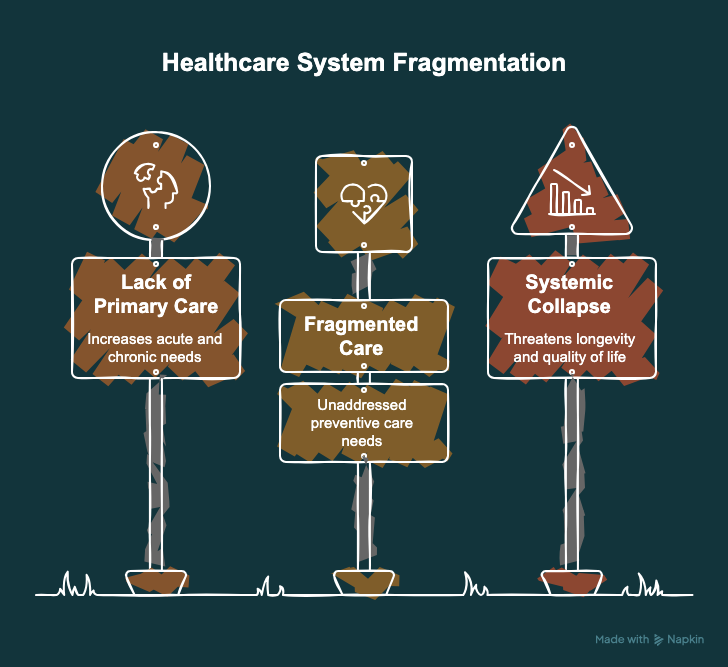
Picture this: you see a cardiologist for your blood pressure, an endocrinologist for your diabetes, and a gastroenterologist for your stomach pain. On paper, that looks like the best care money can buy — three specialists, three sets of expertise. In practice, nobody is looking at the whole picture. You’ve been split into organs instead of treated as one person, and that gap is exactly where things go wrong. Diagnostic errors are the single leading cause of paid medical malpractice claims in the United States, accounting for close to a third of all cases, according to a JAMA Internal Medicine analysis of national malpractice data. Fragmented care isn’t just inconvenient. It’s a patient safety problem with a body count.
Why Fragmented Care Is a Trap
The math on this is only getting worse. By 2034, adults 65 and older will outnumber children in the United States for the first time in the nation’s history, according to US Census Bureau projections. An aging population means more chronic disease, more specialists, more test results flying between offices that don’t talk to each other, and more chances for something important to fall through the cracks.
Here’s the part most people never hear: having a dedicated primary care physician is associated with living longer. A large 2019 study published in JAMA Internal Medicine found that for every 10 additional primary care physicians per 100,000 people in a community, life expectancy rose by an average of 51.5 days — roughly two and a half times the benefit seen from adding the same number of specialists. This isn’t a fringe finding. It’s one of the more consistent results in health services research over the past decade.
This post lays out a three-step primary care prescription. Not a lifestyle hack, not a supplement stack — an actual structural fix for how you use the healthcare system, before a crisis forces the decision for you.
Step 1: Secure Your Shield With a Primary Care Physician
Lock in a dedicated primary care physician before you get sick, not after. Think of your PCP as the air traffic controller for your health. Every specialist, every lab result, every medication change routes through one person who actually knows your full history. That coordination is what catches the drug interaction your cardiologist didn’t know about, or the symptom your endocrinologist wrote off because it wasn’t in their lane.
Waiting until you’re already in crisis to find a doctor puts you in a worse negotiating position: rushed intake, no baseline records, and a provider meeting you for the first time on your worst day. Establishing care now — while you’re healthy — means someone already knows what “normal” looks like for you, which makes it far easier to spot when something changes. For a deeper look at what a PCP actually does day to day, see why you need a primary care physician.
Step 2: Force Continuity
Urgent care clinics and emergency rooms exist for a reason, and they’re good at what they do: acute, one-time problems. What they are not built for is remembering that you’re on three blood pressure medications, or that your last A1C was borderline, or that you’ve had this exact stomach pain twice before and it turned out to be nothing. Each urgent care visit is essentially self-contained. The provider treats what’s in front of them and closes the chart.
That gap has real consequences. Patients who bounce between urgent care visits without a primary care anchor tend to accumulate duplicated tests, conflicting instructions, and delayed recognition of patterns that would be obvious to a physician who’s followed them over time. A comparison of independent primary care versus chain urgent care breaks down exactly where that continuity gap shows up in cost and outcomes. The fix isn’t avoiding urgent care entirely — it’s using your PCP as the default, and urgent care as the exception. If you’re ever unsure which one a specific symptom calls for, this guide to choosing between your PCP, urgent care, or the ER walks through the decision step by step using fever as the example.
Step 3: Deploy a Preventive Care Net
Most people have never heard of the United States Preventive Services Task Force (USPSTF), but its recommendations are some of the most useful, least-used tools in medicine. USPSTF grades screening tests and preventive interventions from A to D based on the strength of the evidence behind them. Grade A and B recommendations — things like blood pressure screening, colorectal cancer screening starting at 45, and statin therapy for certain cardiovascular risk profiles — are the interventions with the clearest evidence of benefit relative to harm.
The problem isn’t that this information is secret. It’s that nobody is coordinating it for you unless you have a primary care physician actively tracking which screenings you’re due for based on your age, sex, and risk factors. That’s a core function of primary care: turning a list of national guidelines into a personal, age-appropriate plan. It’s also where a lot of chronic disease gets caught early enough to matter, rather than late enough to be a crisis.
Patient Accountability Still Matters
None of this works as a one-way street. It’s tempting to want a pill or a procedure that fixes the problem without touching daily habits, but the physiology doesn’t cooperate with that preference. Quitting smoking, getting cholesterol under control, or finally addressing blood pressure that’s been “a little high” for years can meaningfully change your trajectory even if you start late. The primary care relationship gives you a partner for that work — someone who tracks your numbers, adjusts the plan, and holds you to it — but the follow-through is still yours.
Holding your primary care provider accountable matters too. A good PCP should be timely, thorough, and willing to coordinate with specialists rather than just handing you a referral and moving on. That’s a two-way relationship, not a vending machine.
Why Fragmented Care Matters More As You Age
More than 90% of adults age 65 and older have at least one chronic health condition, according to the CDC. That number isn’t going to improve on its own as the population ages — it will keep climbing unless the way people access and coordinate care improves alongside it. A fragmented, specialist-only model was never designed to manage multiple overlapping chronic conditions in the same patient. Primary care was.
This also isn’t just a clinical issue. It’s a cost issue. Duplicated tests, uncoordinated medications, and delayed diagnoses drive spending in ways that a coordinated system avoids. Getting primary care right isn’t only about your longevity — it’s one of the more realistic levers for keeping the broader system solvent as demand keeps rising.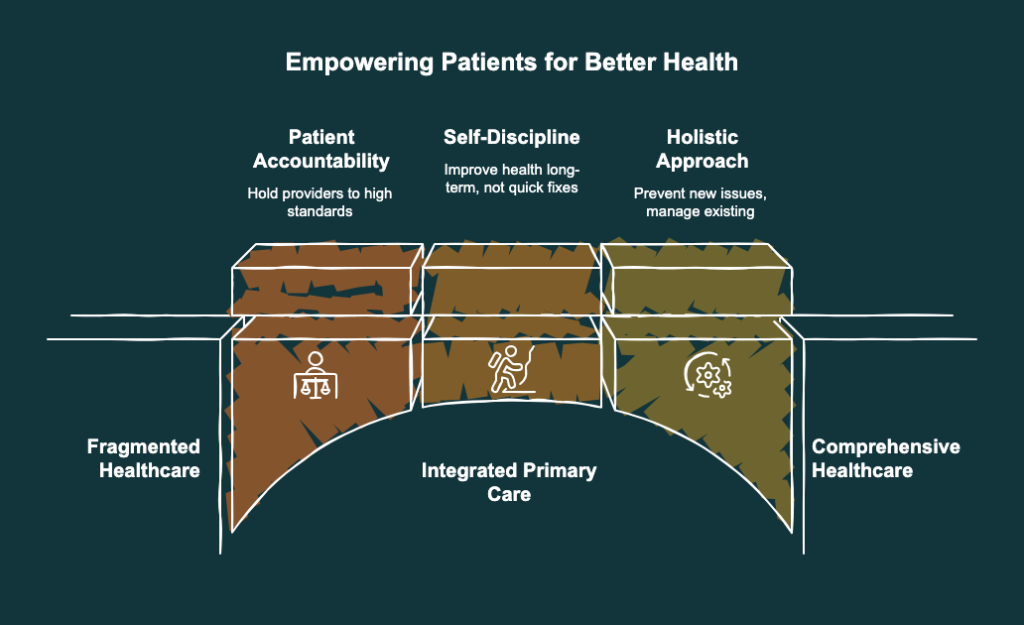
Next Steps
-
- If you don’t currently have a primary care physician, make that your next phone call — not your next symptom’s problem to solve.
- Ask your PCP directly which USPSTF Grade A and B screenings you’re due for based on your age and risk factors.
- Default to your primary care office for non-emergency concerns, and reserve urgent care and the ER for what they’re actually built for.
- If you’re managing a chronic condition, ask about a structured follow-up plan rather than waiting for the next flare-up to trigger a visit.
Primary care isn’t a nostalgic idea from a simpler era of medicine. It’s the coordination layer that a specialist-driven system is missing, and it’s one of the few interventions with evidence behind it for both a longer life and a more manageable healthcare bill. If you’re in the Sebring or Lake Wales area and don’t currently have a dedicated physician, Shield Medical Group offers same-day and walk-in primary care built around exactly this kind of continuity.
Educational only; talk to your clinician about how these recommendations apply to your specific health history.
References
-
- Roberts ET, et al. “Association of Primary Care Physician Supply With Population Mortality in the United States, 2005-2015.” JAMA Internal Medicine, 2019.
- Farmer C, et al. “Diagnostic Error in Medicine.” JAMA Internal Medicine, 2017.
- US Census Bureau. “Demographic Turning Points for the United States.” census.gov, 2020.
- Centers for Disease Control and Prevention. “About Chronic Diseases.” cdc.gov.