Moderna mFlusiva mRNA Flu Vaccine: FDA Approval, Effectiveness and Safety
Moderna’s mFlusiva is the first FDA-approved mRNA influenza vaccine for adults age 50 and older. Here is what the clinical evidence actually shows about effectiveness, safety, approval status, and the future of flu vaccination.
Key Takeaways
- FDA approved Moderna’s mFlusiva, also called mRNA-1010, for adults age 50 and older.
- In a Phase 3 trial of 40,805 adults age 50+, mFlusiva showed 26.6% greater relative protection against PCR-confirmed influenza-like illness than a standard-dose flu vaccine.
- The primary trial compared mFlusiva with a standard-dose vaccine, not a high-dose flu vaccine.
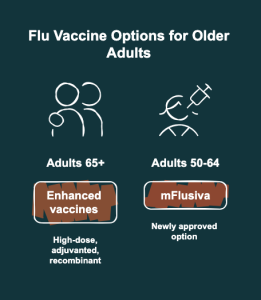
- Adults age 50 to 64 received traditional FDA approval. Adults age 65 and older received accelerated approval, pending confirmation of clinical benefit in a postmarketing study.
- Injection-site pain, fatigue, and headache occurred more often with mFlusiva, but most reactions were mild to moderate and short-lived.
- An mRNA flu vaccine does not contain live influenza virus and cannot cause influenza infection.
What Is Moderna’s mFlusiva?
mFlusiva is Moderna’s mRNA-based seasonal influenza vaccine, scientifically known as mRNA-1010. It is designed to protect against influenza A/H1N1, influenza A/H3N2, and influenza B/Victoria strains represented in the seasonal vaccine formulation.
Unlike traditional egg-based influenza vaccines, mFlusiva uses messenger RNA packaged inside lipid nanoparticles. The mRNA provides temporary instructions that allow the body’s cells to make influenza hemagglutinin proteins, which train the immune system to recognize and respond to influenza viruses in the future.
The vaccine is given as a single intramuscular injection and is approved for adults age 50 and older.
FDA Approval: What It Means
The FDA approved mFlusiva through two different regulatory pathways. Understanding this distinction is important, especially for older adults deciding which flu vaccine may be appropriate for them.
| Age Group | FDA Approval Pathway | Primary Evidence Used |
|---|---|---|
| Adults 50 to 64 years | Traditional approval | Clinical efficacy against PCR-confirmed influenza-like illness compared with a standard-dose flu vaccine |
| Adults 65 years and older | Accelerated approval | Superior immune responses compared with high-dose Fluzone, plus supportive clinical-efficacy data |
For adults 65 and older, the FDA requires Moderna to conduct a confirmatory postmarketing study to verify and describe the vaccine’s clinical benefit. This is not unusual for accelerated approval, which permits earlier access when a product shows a favorable benefit-risk profile based on a surrogate marker reasonably likely to predict benefit.
How Effective Was the mRNA Flu Vaccine?
Moderna’s pivotal Phase 3 trial enrolled 40,805 adults age 50 and older. Participants received either mFlusiva or a licensed standard-dose influenza vaccine and were followed through the 2024–2025 flu season.
| Outcome | mFlusiva Group | Standard-Dose Comparator |
|---|---|---|
| Participants with PCR-confirmed influenza-like illness | 2.0% (411 of 20,179) | 2.8% (557 of 20,124) |
| Relative vaccine efficacy | 26.6% greater relative protection for mFlusiva | |
| Adults age 65 and older subgroup | 27.4% relative vaccine efficacy versus standard-dose flu vaccine | |
In plain language, people who received mFlusiva had fewer confirmed influenza-like illnesses than people who received the standard-dose comparator vaccine. The 26.6% number is a relative improvement compared with another vaccine, not a claim that mFlusiva prevents 26.6% of all flu illness in every population or every season.
The study also found fewer influenza-related healthcare encounters in the mRNA-vaccine group. However, hospitalization events were uncommon, so the trial was not designed to establish a precise reduction in hospitalization risk alone.
Was It Better Than High-Dose Flu Vaccine?
This distinction matters because adults age 65 and older are commonly offered enhanced influenza vaccines, including high-dose, adjuvanted, or recombinant flu vaccines.
The major 40,000-person clinical-efficacy trial compared mFlusiva with a standard-dose influenza vaccine. It did not directly prove that mFlusiva reduces clinical flu illness more than high-dose flu vaccine in seniors.
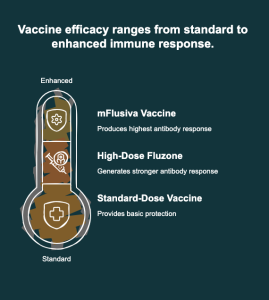
In a separate Phase 3 study involving adults age 65 and older, mFlusiva produced higher hemagglutination-inhibition antibody responses than high-dose Fluzone against all four vaccine-matched strains. These immune-response findings supported accelerated approval for this age group, while a confirmatory clinical-efficacy study is planned.
Why Do We Need New Flu-Vaccine Technology?
Influenza changes continuously. Small genetic changes over time are called antigenic drift. Major changes, usually involving influenza A viruses, are called antigenic shift and can contribute to pandemic risk.
Each year, global health authorities select influenza strains for the upcoming season based on surveillance data. This is a science-based forecasting process, not random guessing. However, a mismatch can occur if circulating viruses change after strain selection or if vaccine production introduces changes that make the vaccine antigen less similar to circulating viruses.
Many traditional flu vaccines are produced in eggs. During egg-based manufacturing, some influenza viruses can acquire egg-adaptive changes that may affect how closely the vaccine antigen resembles the virus circulating in people. Cell-based and recombinant vaccines already reduce some of these limitations. mRNA technology offers another approach.
Potential Advantages of mRNA Technology
- It does not require growing influenza viruses in chicken eggs.
- It may avoid egg-adaptive changes that can affect antigen matching.
- It may allow faster manufacturing and later strain selection before flu season.
- It offers a flexible platform that can be updated as circulating viruses evolve.
- It provides an egg-free option for people who prefer to avoid egg-based vaccine production.
Importantly, mRNA technology does not eliminate antigenic drift or antigenic shift. Influenza viruses will continue to evolve. The potential benefit is that mRNA platforms may help vaccine manufacturers respond more quickly and precisely to those changes.
How Does an mRNA Flu Vaccine Work?
A useful analogy is a temporary recipe card. The vaccine delivers mRNA instructions into cells near the injection site. Those cells briefly use the instructions to make a harmless influenza protein target called hemagglutinin.
The immune system sees that protein, creates antibodies and immune memory, and then the mRNA instructions break down naturally. The mRNA does not enter the cell’s nucleus, does not alter a person’s DNA, and does not remain in the body long term.
Can mRNA Flu Vaccine Cause the Flu?
No. mFlusiva does not contain live influenza virus. It cannot reproduce in the body and cannot cause influenza infection. Some people may develop short-term immune-related symptoms such as soreness, fatigue, headache, body aches, or mild fever after vaccination. These reactions are not influenza illness.
mFlusiva Safety: What Did the Trials Show?
The FDA reviewed safety data from multiple Phase 3 trials, including an integrated safety analysis involving more than 70,000 participants age 50 and older. The mRNA vaccine produced more short-term local and systemic reactions than standard-dose or high-dose comparator vaccines, but most reactions were mild to moderate and resolved quickly.
| Common Reaction | What Patients May Experience | Typical Duration |
|---|---|---|
| Injection-site reaction | Pain, tenderness, swelling, or redness | Usually brief |
| Systemic symptoms | Fatigue, headache, muscle aches, chills, or low-grade fever | Usually 1 to 2 days |
| Serious adverse events | Uncommon and overall balanced between study groups | Requires medical assessment when present |
In the pivotal study, the most commonly reported reactions among mFlusiva recipients included injection-site pain, fatigue, and headache. Across the broader clinical program, rates of serious adverse events and adverse events of special interest were generally balanced between mFlusiva and comparator vaccine groups.
No cases of myocarditis or pericarditis were reported within 42 days after vaccination in the mRNA-1010 group in the integrated analysis. The FDA nevertheless requires ongoing postmarketing monitoring for myocarditis, pericarditis, Guillain-Barré syndrome, and deaths, including unspecified-cause deaths. Continued surveillance is a normal and essential part of vaccine safety oversight.
Who Should Consider mFlusiva?
mFlusiva is FDA approved for adults age 50 and older. The best flu-vaccine choice depends on age, health conditions, prior vaccine reactions, local availability, and personal preferences.
- Adults age 50 to 64 may discuss mFlusiva as a newly approved flu-vaccine option.
- Adults age 65 and older should discuss mFlusiva alongside other enhanced flu-vaccine options, including high-dose, adjuvanted, and recombinant formulations.
- People with a history of severe allergic reaction to a vaccine component should seek individualized guidance before vaccination.
- People who are moderately or severely ill should generally wait until recovery before receiving routine vaccination.
Frequently Asked Questions
Is mFlusiva the first mRNA flu vaccine approved in the United States?
Yes. Moderna’s mFlusiva is the first FDA-approved mRNA vaccine specifically for seasonal influenza in the United States.
Does mFlusiva replace every other flu shot?
No. Other influenza vaccines remain important options. The right product depends on age, medical history, vaccine availability, and current public-health recommendations.
Is the 26.6% result an absolute reduction in flu risk?
No. It is relative vaccine efficacy versus a standard-dose flu vaccine. In the trial, PCR-confirmed influenza-like illness occurred in 2.0% of mFlusiva recipients and 2.8% of comparator recipients.
Does mFlusiva contain live virus?
No. The vaccine contains mRNA instructions packaged in lipid nanoparticles. It does not contain live influenza virus and cannot cause influenza infection.
Can I receive mFlusiva with other vaccines?
Talk with your healthcare professional. The FDA review noted that data on coadministration with COVID-19, RSV, and pneumococcal vaccines were limited at the time of approval.
Bottom Line
Moderna’s mFlusiva marks an important advance: it is the first FDA-approved mRNA flu vaccine for adults 50 and older, and it outperformed a standard-dose influenza vaccine in a large clinical trial. The technology may improve manufacturing speed and reduce limitations associated with egg-based vaccine production.
At the same time, clear communication matters. The strongest clinical-efficacy evidence is versus a standard-dose flu vaccine. For adults 65 and older, high-dose comparator data are currently based on immune response, and a confirmatory study is still required to establish clinical benefit. The available data support a favorable benefit-risk profile, with the usual expectation of ongoing safety monitoring and transparent reporting.
Sources and Further Reading
- U.S. Food and Drug Administration. Clinical Review: mFlusiva (mRNA-1010), August 5, 2026.
- U.S. Food and Drug Administration. Vaccines and Related Biological Products Advisory Committee Briefing Document: mRNA-1010.
- Centers for Disease Control and Prevention. Influenza Vaccination Information.
- KundlasMD. FDA Approves Moderna’s mRNA Flu Shot for Adults 50+: Video Explanation.
Watch the Full Video
Learn more about Moderna’s mRNA flu vaccine, vaccine safety, and preventive care from Dr. Kulmeet Kundlas.