
🩺 By Dr. Kulmeet Kundlas, MD — Board-Certified Internal Medicine, Shield Medical Group
Living with diabetes? Learn carb counting step by step — read labels, measure portions, use MyFitnessPal, and build a gestational diabetes diet that works.
Living with Diabetes: A Simple Carb Counting Guide
By Kulmeet Kundlas MD, Board-Certified Internal Medicine — Shield Medical Group, Sebring & Lake Wales, Florida
Carb counting for diabetes is one of the most useful skills you can learn. If you are living with diabetes — or someone just told you that you are — there is a very good chance you have heard the words “watch your carbs.” But nobody actually sat down and showed youhow. The research strongly supports that carbohydrate counting is the single most important dietary skill for managing blood sugar. The American Diabetes Association has said it for years. Yet studies show the majority of people with diabetes have never received formal nutrition education.
By the end of this guide, you will know exactly what a carb is, which foods have them, how to read a label in ten seconds, how to measure a portion without a scale, and how to build a plate at every single meal that keeps your blood sugar where you want it. Whether you have type 1, type 2, prediabetes, or you are following a gestational diabetes diet— this is your practical starting point.
Why Carbs Matter When You Are Living with Diabetes
Here is the question heard more than almost any other in a primary care clinic: “Doctor, what am I supposed to eat?” And it is usually followed by a long list of contradictions — no rice, no fruit, go keto, eat only meat. If that sounds familiar, you are not alone.
The nutrition information landscape is a mess. When you get diagnosed with diabetes — whether it is type 2, type 1, or gestational diabetes — nobody hands you a manual. They hand you a diagnosis and say “watch what you eat.”
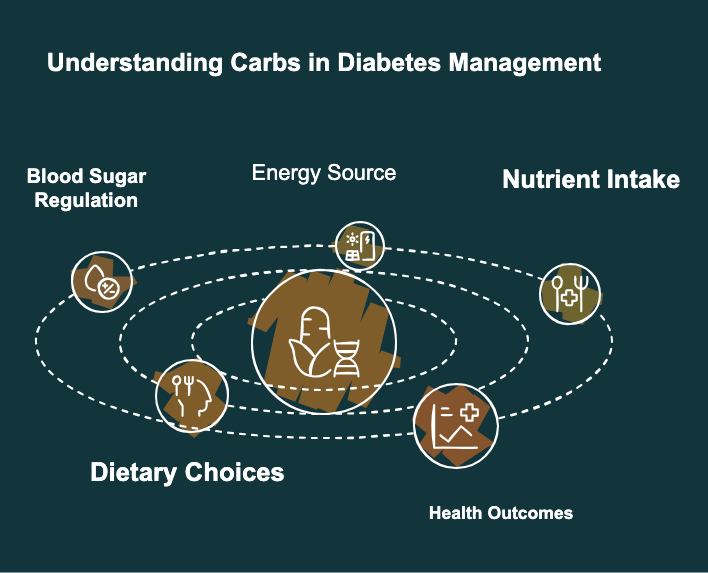
So here is the simplest, most honest answer: the single most important thing to understand about food when you have diabetes is carbohydrates. Not calories, not fat, not protein. Carbohydrates are the nutrient that raises your blood sugar the most.
That does not mean carbs are evil. It does not mean you can never eat bread, rice, or fruit again. It means you need to knowhow muchyou are eating. That skill — knowing how many carbs are on your plate — is called carb counting.
Think of It Like a Budget
If someone told you to “spend less money,” that would be vague and unhelpful. But if they showed you how to check your bank account, read your receipts, and set a daily spending limit — now you have power. Carb counting is a budget for your blood sugar.
This information is useful for anyone:
- Type 2 diabetes, type 1 diabetes, prediabetes, or gestational diabetes
- Anyone who cooks for someone with diabetes
- Anyone whose A1C came back higher than expected
- Anyone curious about eating smarter
This guide isnota replacement for a personalized meal plan from a registered dietitian. If your doctor has given you specific instructions — like carb-to-insulin ratios for type 1 diabetes — follow those. This is the foundation you should have been taught on day one.
The real problems most people face are threefold:
- External:You do not know how many carbs are in the food you eat every day.
- Internal:That makes you feel anxious, guilty, and frustrated at every meal.
- Deeper:You feel like you have lost control of your own health.
By the end of this guide, you are going to feel like you have that control back.
What the Science Says About Carb Counting and Blood Sugar
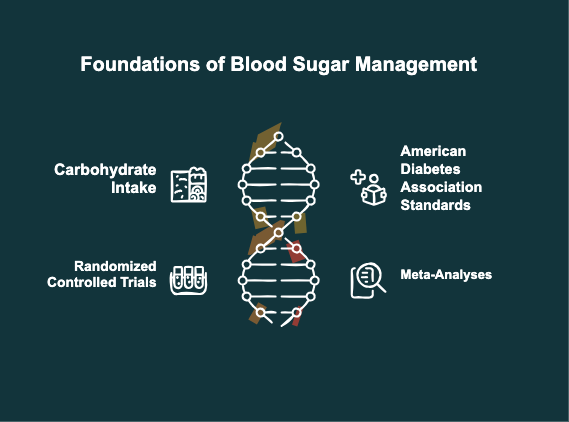
The research strongly supports that carbohydrate intake is the primary dietary factor affecting blood sugar after meals. This is not controversial — it is physiology. The American Diabetes Association has consistently stated in theirStandards of Carethat monitoring carbohydrate intake is a key strategy for blood sugar management. This is guideline-level evidence — the strongest tier available.
A large body of research — including randomized controlled trials and meta-analyses — has shown that when people with diabetes learn to count carbs and eat consistent amounts, their A1C levels improve. Reductions of half a percent to a full percent have been observed in some studies, which is clinically meaningful. To put that in perspective, some diabetes medications aim for a similar reduction.
Different Types, Same Foundation
Carb counting is especially important in type 1 diabetes, where matching insulin doses to carb intake is essential. For type 2 diabetes and prediabetes, the benefit is just as real.
For gestational diabetes— diabetes that develops during pregnancy — the evidence strongly supports that a carb-controlled eating plan is the first-line approach. Before medication is even considered, carb management is where every guideline starts. A well-structured gestational diabetes dietfocuses on distributing carbs across meals and snacks to avoid large blood sugar spikes.
What About Keto and Low-Carb Diets?
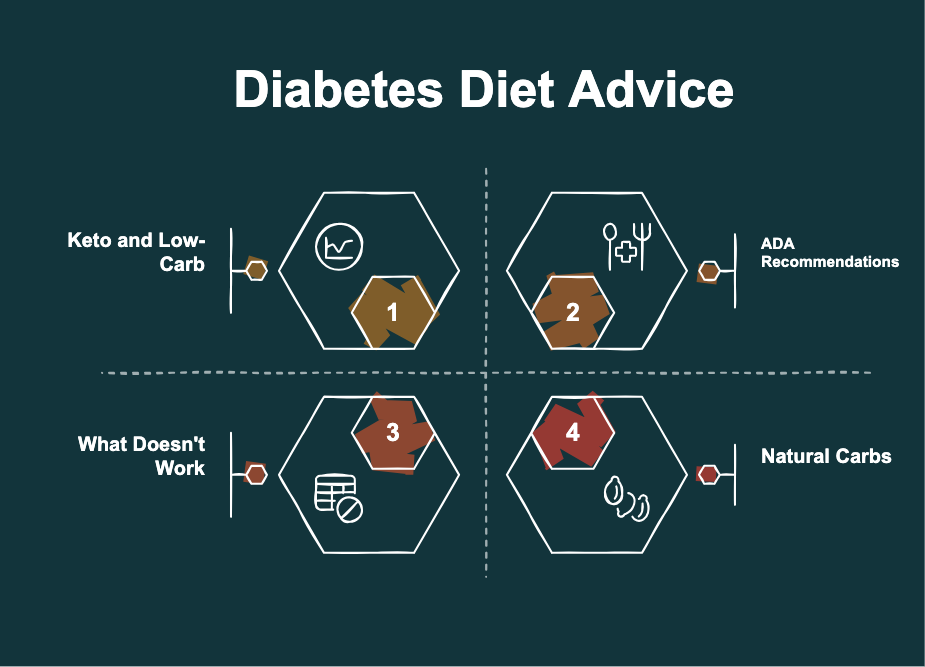
There is promising evidence that very low-carb diets can improve blood sugar control in the short term — six to twelve months. However, long-term data is limited, sustainability is a real concern, and no major guideline recommends one single diet for everyone with diabetes. The ADA says multiple eating patterns can work — including Mediterranean, DASH, plant-based, and low-carb — as long as carb quality and quantity are managed.
What doesnotwork? There is no good evidence that any specific supplement lowers blood sugar reliably enough to replace carb management. “Detox” diets and juice cleanses have no evidence supporting diabetes management. And the claim that you can eat unlimited carbs as long as they are “natural” is not supported either. A banana still has carbs. A glass of orange juice still has carbs. Natural does not mean free.
How Your Body Handles Carbs — the Simple Explanation
Picture your body as a house, and glucose — blood sugar — as the electricity that powers everything. Your muscles need it. Your brain needs it. Every cell needs it.
When you eat carbohydrates — bread, rice, pasta, fruit, milk, beans — your digestive system breaks them down into glucose. That glucose enters your bloodstream. Now your body has to move that glucose out of the blood and into the cells.
This is where insulin comes in. Insulin is like a key that unlocks the door to your cells. When insulin shows up, the door opens and glucose flows in. Without that key, glucose piles up in the blood — and that is high blood sugar.
- Type 1 diabetes:Your body does not make the key at all. You must inject insulin.
- Type 2 diabetes:You have keys, but the locks are rusty — that is insulin resistance.
- Gestational diabetes:Pregnancy hormones temporarily make the locks stiff.
The critical piece: the more carbs you eat at once, the more glucose floods into the blood, and the harder your body works to clear it. But if you eat a moderate, predictable amount of carbs — spread throughout the day — your blood sugar rises gently and comes back down smoothly.
Four levers control your blood sugar response:
- The amount of carbs per meal
- The type of carbs (whole grains vs. refined)
- What you eat with them — protein and fat slow absorption
- The timing of your meals
Your Practical Carb Counting Playbook for Living with Diabetes
This is where theory becomes action. Follow these five steps, and you will be able to sit down to any meal, anywhere, and make a smart decision.
Step 1 — Know Your Carb Target
Before you count anything, you need a target. A registered dietitian or your doctor can personalize this, but here is a general framework consistent with ADA guidance:
- Breakfast:30–45 grams of carbs
- Lunch:30–60 grams
- Dinner:30–60 grams
- Snacks:15–20 grams each
- Daily total:approximately 130–200 grams
For a gestational diabetes diet, targets are often slightly different — many guidelines suggest around 175 grams per day minimum, distributed across three meals and two to three snacks to avoid big spikes. Your OB or dietitian will provide specific numbers.
For type 1 diabetes, the goal is matching insulin to carb intake using carb-to-insulin ratios — a more advanced strategy done with yourendocrinologist or care team.
Step 2 — Learn Which Foods Have Carbs
Foods that contain significant carbohydrates include:
- Grains and starches — bread, rice, pasta, tortillas, cereal, oatmeal, potatoes, corn
- Fruits — all of them, even the healthy ones
- Dairy — milk and yogurt (cheese has very little)
- Beans and legumes — lentils, chickpeas, black beans
- Sugary foods and drinks — soda, juice, candy, pastries
- Starchy vegetables — peas, sweet potatoes, butternut squash
Foods with very few or no carbs include non-starchy vegetables like broccoli, spinach, peppers, cucumbers, and cauliflower. Meat, poultry, fish, eggs, cheese, nuts in small portions, and oils are also very low in carbs.
Step 3 — Read a Nutrition Label in Ten Seconds
When you pick up any packaged food, check three things:
- Serving size— at the very top of the label. Everything is based on this amount.
- Total carbohydrates— not sugar, total carbohydrates. This is your number.
- Dietary fiber— some people subtract fiber for “net carbs.” A food with 25 grams total carbs and 7 grams fiber has 18 net carbs.
That is it. Serving size, total carbs, fiber. Ten seconds.
Step 4 — The Hand Method for Portions
You will not carry a food scale to a restaurant. Use your hand instead:
- Your fist≈ one cup (a serving of rice, pasta, or cereal — roughly 45 grams of carbs)
- Your cupped hand≈ half a cup (a serving of fruit or beans — roughly 15–20 grams of carbs)
- Your palm≈ 3 ounces of meat (zero carbs, but builds a balanced plate)
- Your thumb tip≈ one tablespoon (useful for peanut butter or dressings)
A balanced diabetes plate: one fist of starch, one to two cupped hands of vegetables, one palm of protein. The carbs are probably around 30 to 50 grams — manageable.
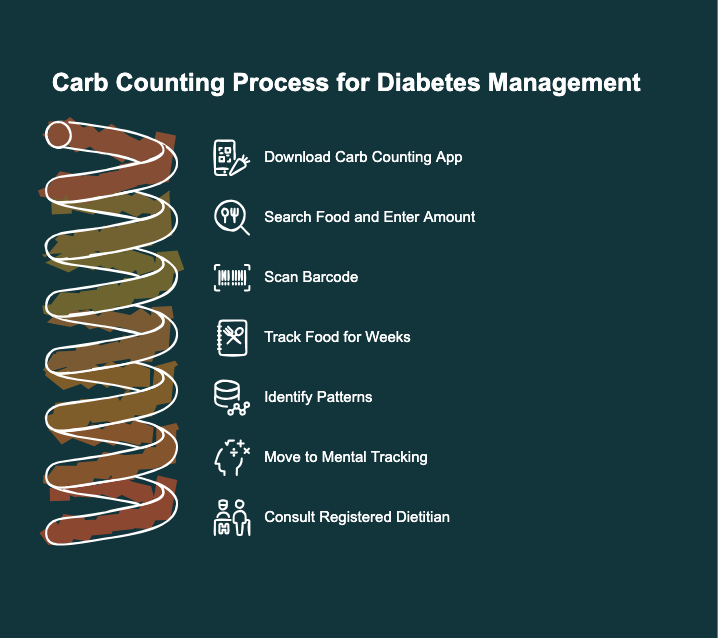
Step 5 — Track with a Free App Like MyFitnessPal
Free apps likeMyFitnessPal, Crono meter, and Carb Manager let you search for a food, enter the amount, and see the carb count instantly. Many let you scan a barcode and the nutrition info pops up.
Track everything you eat for at least two to four weeks when starting out. This is an education phase. That yogurt you thought was healthy? Thirty-four grams of carbs. That granola bar? Twenty-eight grams. That small glass of orange juice? Twenty-six grams.
After a few weeks, patterns emerge. You know the carb counts of your regular meals by heart. Then you move to confident “mental tracking” without the app.
Carb counting takes effort in the beginning — maybe ten to fifteen extra minutes a day. But within a few weeks it becomes second nature. The payoff — steadier blood sugars, better A1C, more energy, less guessing, less guilt — is enormous. This is the highest-return skill you can learn as a person living with diabetes.
Should you still see a registered dietitian? Yes, if you can. They personalize your targets, help withmeal planning for your culture and food preferences, and adjust things as your medications change.
What to Expect — Your Realistic Timeline and Common Mistakes
Knowing the timeline keeps you from quitting too early. Here is what most patients experience:
- First 48 hours:You are reading every label and discovering foods you thought were “safe” have more carbs than expected. That shock is a good sign — you are paying attention.
- Week 1:Meals feel more intentional. You are building a mental library of go-to foods and their carb counts. Blood sugars may already look a little smoother.
- Month 1:You can estimate most meals without the app. Fasting blood sugars may start coming down. Post-meal numbers could be ten to thirty points lower on average.
- Month 3:A1C may have improved by half a percent or more. You are likely eating more vegetables and protein and less processed food — naturally.
- Month 6 and beyond:Carb counting is a habit, not a chore. Your kidneys, eyes, heart, and nerves all benefit from steadier blood sugar over time.
Success does not look like perfection. You will have birthday parties, holiday dinners, and stressful days. Success is the pattern, not the single day. Get back on track at the next meal.
Seven Common Mistakes to Avoid
- Ignoring serving sizes:If the serving is half a cup and you ate two cups, you quadrupled the carbs.
- Only looking at sugar:“Zero sugar” does not mean zero carbs. Starch becomes glucose too.Total carbohydrates is always your number.
- Assuming healthy means carb-free:Brown rice is healthier than white rice — but has nearly the same carb count. A banana has 25–30 grams of carbs.
- Skipping meals to “save” carbs:This leads to blood sugar drops, ravenous hunger, and massive spikes at the next meal. Spread carbs evenly across the day.
- Forgetting liquid carbs:A twelve-ounce can of regular soda has about 39 grams of carbs — an entire meal’s worth. Count your drinks.
- Comparing yourself to others:Your body, medications, and activity level are different. Focus on your own data.
- Turning carb counting into an obsession:If it causes significant anxiety ordisordered eating patterns, talk to your doctor.
One big myth needs addressing: the idea that people with diabetes “cannot eat carbs.” That is false. You can eat carbs. You just need to know how many you are eating and make thoughtful choices. There is a huge difference between “no carbs ever” and “the right amount of the right carbs at the right time.”
Your Next Move — Start Today
Here are your action steps, tiered so you do not feel overwhelmed:
- Today:Download a free carb-counting app —MyFitnessPal, Cronometer, or Carb Manager. Log your next meal. Just one meal. That single action puts you ahead of most people living with diabetes.
- This week:Log everything you eat for seven days. Do not change what you eat — just track honestly. At the end of the week, look at your average daily carbs and your average per meal. Now you have a baseline.
- This month:Set your carb targets using the guidelines shared above or with help from your doctor. Build your list of go-to meals. Aim for consistency.
- Ongoing:Check blood sugar before and two hours after meals occasionally. Bring your food logs to your next doctor’s appointment. Get yourA1C checked every three monthsto see the big picture.
If you only do one thing from this entire guide:learn the carb count of your five most common meals.That single piece of knowledge will change your blood sugar more than anything else you could do today.
If you want to talk about this with a doctor who takes the time to explain things, that is exactly what we do atShield Medical Groupin Sebring and Lake Wales, Florida. We see patients with diabetes every single day, and we believe you deserve to understand your condition — not just be told what to do.
This article is for educational purposes only and does not replace individualized medical advice. Always consult your physician or a registered dietitian before making changes to your diet or diabetes management plan.
Frequently Asked Questions
Frequently Asked Questions About Carb Counting and Diabetes
How many carbs should a person with type 2 diabetes eat per day?
A reasonable starting target for most adults with type 2 diabetes is approximately 130 to 200 grams of carbs per day, spread across meals and snacks. The ADA recommends working with your doctor or dietitian to personalize your specific daily carb target based on your medications, activity level, and blood sugar goals.
What is the best diet for gestational diabetes?
A gestational diabetes diet focuses on controlling carbohydrate intake — typically around 175 grams per day minimum — distributed across three meals and two to three snacks. This carb-controlled approach is the first-line strategy recommended by clinical guidelines, even before medication is considered.
Can I use MyFitnessPal to count carbs for diabetes?
Yes, MyFitnessPal is a free app that lets you search foods, scan barcodes, and see carb counts instantly. Tracking everything you eat for two to four weeks using an app like MyFitnessPal helps you build a mental library of your go-to foods and their carb values.
What is the difference between total carbs and sugar on a nutrition label?
Total carbohydrates include sugar, fiber, and starch combined — and this is the number that matters for blood sugar management. Starch converts to glucose in your body just like sugar does, so a food labeled “zero sugar” can still have significant carbs.
Can people with diabetes eat fruit?
Yes, people with diabetes can eat fruit, but they need to count the carbs. A medium banana contains roughly 25 to 30 grams of carbohydrates, so it should be factored into your meal’s carb budget rather than treated as a “free” food.
How long does it take for carb counting to lower A1C?
Many people see A1C improvements of half a percent or more within about three months of consistent carb counting. Research supports this timeline, and the improvements tend to continue and stabilize over six months and beyond.
What is the hand method for measuring portions?
The hand method lets you estimate portions without a scale — your fist equals about one cup of starch (roughly 45 grams of carbs), your cupped hand is about half a cup, and your palm is about three ounces of protein. This approach makes carb estimation practical when eating out or away from home.
Is a low-carb or keto diet the best option for diabetes?
Very low-carb diets show promising short-term results for blood sugar control, but long-term data is limited and sustainability is a concern. The American Diabetes Association states that multiple eating patterns can work — the best plan is one you can follow consistently while managing carb quality and quantity.
Key Takeaways on Carb Counting for Diabetes
Carb counting for diabetes works because it connects what is on your plate to what happens in your blood. When you learn carb counting for diabetes, you gain a simple, repeatable skill: identify the carbs, estimate the grams, and match them to your plan. Start with one meal a day, use a food label or a trusted app, and build from there. For evidence-based guidance, review the American Diabetes Association’s carb counting resources and the CDC’s healthy eating guidance for diabetes, and always discuss your targets with your own clinician.