
Understanding Borderline Vitamin B12 Levels
Feeling tired, foggy, or experiencing tingling sensations despite having a “normal” vitamin B12 result is more common than you might think. A single lab number doesn’t always tell the full story, especially if it’s near the low end of the range. Understanding borderline vitamin B12 levels matters because vitamin B12 supports your nerves, brain, and the healthy red blood cells that carry oxygen. When vitamin B12 sits in the gray zone, symptoms can be subtle and easy to dismiss, so it helps to know what the number really means and what to do next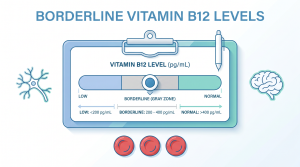 .
.
Why One Vitamin B12 Number Can Mislead
Routine blood tests measure total B12 levels, but this doesn’t always reflect the amount your body can actually use. This means that a result can appear normal on paper while still warranting further investigation, particularly if it’s borderline.
Many labs consider a B12 deficiency to be below about 200 pg/mL. Levels between 200 and 300 pg/mL are often seen as borderline and may require additional testing.
Tests That Clarify a Borderline Result
If your B12 level is borderline, additional tests can provide more clarity. These include:
- Active B12: Measures the B12 available to tissues, though not all labs offer this test.
- Methylmalonic Acid (MMA): Levels rise when cells lack B12, but can also increase due to kidney disease.
- Homocysteine: Can rise with low B12 or folate levels, but is not specific to B12 deficiency.
Guidelines recommend interpreting these tests in context and, if possible, checking them before starting high-dose supplements.
Why the Cause Matters
Understanding the cause of low B12 is crucial. It can result from dietary habits, autoimmune stomach disease, bowel disease, surgery, or medications like metformin and acid-reducing drugs. The cause determines whether someone needs short-term treatment or lifelong B12 replacement.
Pills, Shots, and Supplement Forms
For most adults, the dosage of B12 is more important than whether the supplement is methylcobalamin or cyanocobalamin. Studies have not shown a clear benefit of “active” forms over standard cyanocobalamin.
High-dose oral B12 can be as effective as injections for many people. Sublingual tablets are also not proven to be superior to regular tablets at similar doses.
Choosing a Supplement
When selecting a B12 supplement, focus on quality. Look for products that are USP Verified or NSF Certified to ensure they contain what the label claims.
When to See a Clinician
Consider seeing a clinician if you experience numbness, tingling, balance issues, memory changes, or persistent fatigue. It’s also important to get evaluated if you are vegan, over 60, use metformin or acid-suppressing drugs long-term, or have conditions like Crohn’s disease or have had bariatric surgery.
The key question is not only whether B12 is low, but why. If your results keep landing in the borderline range, ask about repeat testing and a clear follow-up plan. Tracking your vitamin B12 over time, alongside diet and any risk factors, gives a far more reliable picture than a single reading. With the right vitamin B12 testing and treatment plan, most people can correct a borderline result and protect their long-term nerve and brain health.
Frequently Asked Questions
- What B12 level is borderline?Many clinicians consider levels between 200 to 300 pg/mL as borderline.
- Can B12 be low even if the lab says normal?Yes, especially if symptoms or risk factors are present.
- What test helps confirm borderline B12?MMA, active B12, and sometimes homocysteine are the usual follow-up tests.
- Is sublingual B12 better?Not clearly; dose usually matters more than the route of administration.
- Are B12 shots better than pills?Not always; high-dose oral B12 works well for many people.
Educational only; talk to your clinician. For more detail on vitamin B12, see the NIH vitamin B12 fact sheet.

