By Kulmeet Kundlas MD, Board-Certified Internal Medicine — Shield Medical Group, Sebring and Lake Wales, Florida
Your blood pressure, cholesterol, and hemoglobin A1C are not just numbers on a lab report. A single result is a snapshot. Repeated measurements over time can tell the story of your health and help identify problems before they become harder to treat.
I am Dr. Kulmeet Kundlas, a primary care physician with more than 30 years of experience. In my clinic, men often ask the same practical questions: “What should my blood pressure be?” “What does my A1C mean?” “Should I worry about my cholesterol?” This guide explains the vital men’s health numbers and preventive screenings that deserve your attention.
Educational only; talk to your clinician.
Why Your Health Numbers Matter
One abnormal blood pressure reading, cholesterol level, or blood sugar result does not always establish a diagnosis. Measurements can be affected by sleep, stress, illness, medications, exercise, alcohol, caffeine, and how the test was performed.
What matters is the pattern. When we track your numbers across annual visits, lab work, and home monitoring, we can see whether a risk is improving, stable, or moving in the wrong direction. That gives you and your clinician time to act before a preventable problem becomes a heart attack, stroke, kidney disease, or type 2 diabetes.
Schedule Your Annual Physical Near Your Birthday
A simple habit can make preventive care easier: schedule your annual physical around your birthday. Many people naturally reflect on their goals around that time of year. Pairing your birthday with an annual health visit creates a practical reminder to review your medications, vaccines, screening tests, labs, sleep, exercise, and mental health.
Your needs are personal. Your family history, smoking history, medications, weight, medical conditions, race and ethnicity, and prior test results may change which screenings make sense and when to begin them.
How USPSTF Recommendations Work
The U.S. Preventive Services Task Force, usually called the USPSTF, is an independent panel that reviews evidence for preventive services. Its letter grades do not mean that a test is automatically right or wrong for every individual. They summarize the balance of likely benefit and likely harm for the population addressed by the recommendation.
| USPSTF Grade | What It Generally Means |
|---|---|
| A | High certainty that the preventive service has substantial net benefit. |
| B | High certainty of moderate benefit, or moderate certainty of moderate to substantial benefit. |
| C | Offer selectively based on the patient’s circumstances, preferences, and clinical judgment. The overall benefit is small for the population addressed. |
| D | Discourage use because the service has no net benefit or the harms outweigh the benefits. |
| I Statement | Current evidence is insufficient to determine whether benefits outweigh harms. |
These recommendations evolve as new evidence becomes available. That is why preventive care should be reviewed regularly instead of relying on an old checklist.
The Vital Numbers Every Man Should Know
1. Blood Pressure
Blood pressure is one of the most important health numbers because uncontrolled high blood pressure increases the risk of stroke, heart attack, heart failure, kidney disease, and other complications. The USPSTF recommends screening adults age 18 and older with an office blood pressure measurement, with measurement outside the clinic used to confirm a diagnosis before treatment begins when appropriate.
For many adults, a blood pressure goal below 130/80 mm Hg is commonly used, but the right target depends on your age, health conditions, medications, and risk of treatment side effects. Do not diagnose yourself from one high reading.
- Normal: Less than 120/80 mm Hg.
- Elevated: Systolic 120–129 mm Hg and diastolic below 80 mm Hg.
- Stage 1 hypertension: Systolic 130–139 mm Hg or diastolic 80–89 mm Hg.
- Stage 2 hypertension: Systolic at least 140 mm Hg or diastolic at least 90 mm Hg.
For a reliable home reading, sit quietly for at least five minutes, keep both feet flat on the floor, support your arm at heart level, use the correct cuff size on the upper arm, and avoid caffeine, smoking, or exercise for 30 minutes beforehand. A validated upper-arm monitor is generally preferred over a wrist monitor.
Urgent note: A reading of 180/120 mm Hg or higher can be serious. If it is accompanied by chest pain, shortness of breath, weakness, numbness, trouble speaking, severe headache, vision changes, or confusion, call 911. If you have a very high reading without symptoms, contact a clinician promptly for guidance.
2. Body Mass Index and Waist Size
Body mass index, or BMI, uses height and weight to estimate whether weight may be affecting health risk. It is useful as a screening tool, but it does not directly measure body fat and can be misleading in some people with high muscle mass or certain body types.
- 18.5–24.9: Standard BMI range.
- 25.0–29.9: Overweight range.
- 30.0 or higher: Obesity range.
For many men, waist circumference adds useful information because abdominal fat is strongly associated with insulin resistance, type 2 diabetes, fatty liver disease, sleep apnea, and cardiovascular disease. A waist measurement above 40 inches in men is associated with increased cardiometabolic risk, although ethnicity and individual health factors matter.
3. Blood Sugar and Hemoglobin A1C
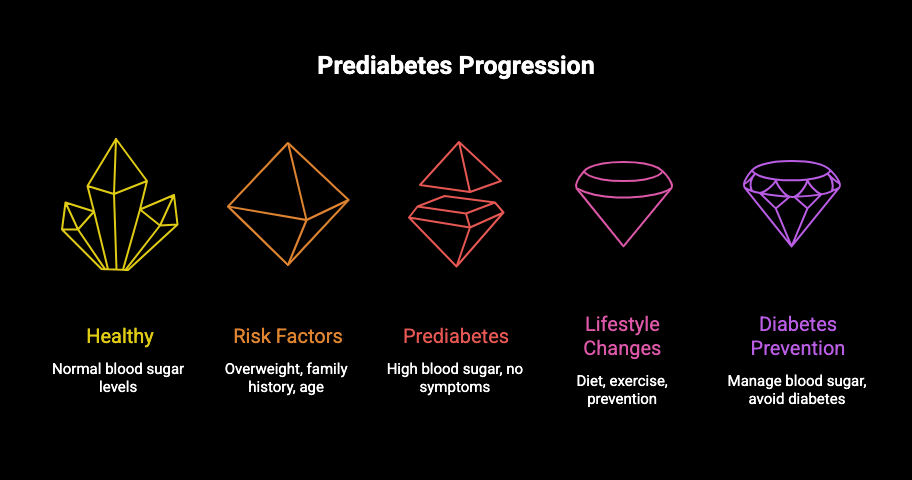
Your hemoglobin A1C estimates your average blood sugar over roughly the prior two to three months. A fasting glucose is a point-in-time measurement. Both can be useful, especially when a pattern is developing.
| Test | Typical Prediabetes Range | Typical Diabetes Threshold |
|---|---|---|
| Hemoglobin A1C | 5.7% to 6.4% | 6.5% or higher, usually confirmed with repeat testing unless symptoms and marked high glucose are present |
| Fasting glucose | 100 to 125 mg/dL | 126 mg/dL or higher, usually confirmed with repeat testing |
| Two-hour oral glucose tolerance test | 140 to 199 mg/dL | 200 mg/dL or higher, usually confirmed with repeat testing |
The USPSTF recommends screening for prediabetes and type 2 diabetes in adults ages 35 to 70 who have overweight or obesity. Earlier testing may be appropriate when a person has risk factors such as family history, high blood pressure, abnormal cholesterol, sleep apnea, a history of cardiovascular disease, or symptoms of high blood sugar.
If you have prediabetes, it is not a reason to panic. It is a chance to intervene. Weight loss when indicated, regular physical activity, improved sleep, more fiber and protein-rich foods, and fewer sugary beverages can reduce the risk of progression to type 2 diabetes.
4. Cholesterol and Cardiovascular Risk
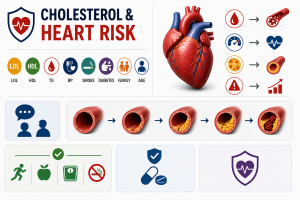
Cholesterol results are important, but no single cholesterol number tells the whole story. Your clinician considers LDL cholesterol, HDL cholesterol, triglycerides, blood pressure, smoking status, diabetes status, family history, age, and other factors to estimate your overall risk of heart attack and stroke.
Think of cardiovascular risk as a long-term accumulation. High blood sugar can injure blood vessel lining. High blood pressure adds mechanical stress. LDL cholesterol can contribute to plaque formation in the damaged vessel wall. When these problems occur together, risk rises.
Ask for a conversation about your full cardiovascular risk rather than focusing only on whether your total cholesterol is “good” or “bad.” For some men, lifestyle changes are enough. For others, medications such as statins meaningfully reduce risk.
5. Depression, Alcohol, Tobacco, and Drug Use
Preventive care is not limited to lab values. Depression screening is important because depression is common, treatable, and often missed in men who may describe irritability, poor sleep, fatigue, alcohol overuse, withdrawal from family, or loss of motivation instead of sadness.
Tobacco use should be addressed at every visit. Quitting can take several attempts, and needing more than one attempt does not mean you have failed. Medication, nicotine replacement, counseling, and structured support improve the chance of success.
Alcohol and substance-use screening also matter. Be honest with your primary care team. The goal is not judgment. It is identifying risks early and helping you protect your health, relationships, work, and safety.
Cancer Screenings Men Should Discuss
Colorectal Cancer Screening
For adults at average risk, the USPSTF recommends colorectal cancer screening from age 45 through age 75. Several effective options exist, including stool-based tests and visual exams such as colonoscopy. The best test is often the one you are willing and able to complete on schedule.
Adults ages 76 to 85 may benefit selectively based on overall health, previous screening history, and preferences. Screening is generally not recommended after age 85.
Lung Cancer Screening
Annual low-dose CT screening is recommended for adults ages 50 to 80 who have at least a 20 pack-year smoking history and currently smoke or quit within the past 15 years. A pack-year means packs smoked per day multiplied by years smoked. For example, one pack a day for 20 years equals 20 pack-years.
If you currently smoke, the most powerful intervention remains smoking cessation. Screening helps find lung cancer earlier, but quitting lowers risk across the body.
Prostate Cancer Screening
PSA testing should be a shared decision, not an automatic test for every man. The USPSTF recommends that men ages 55 to 69 make an individual decision about periodic PSA-based screening after discussing possible benefits and harms with a clinician. It recommends against routine PSA-based screening for men age 70 and older.
A family history of prostate cancer, Black ancestry, prior PSA levels, and personal priorities can influence the conversation. A high PSA does not automatically mean cancer, and screening can lead to false-positive results, biopsies, overdiagnosis, and treatment side effects. That is why individualized decision-making matters.
Vaccines Are Preventive Care
Vaccines protect adults from diseases that can cause hospitalization, disability, or death. Your needs depend on age, prior vaccine history, allergies, travel, occupation, chronic conditions, and immune status. Review them during your annual physical.
- Influenza: Recommended every year.
- COVID-19: Follow the current CDC schedule and individualized recommendation.
- Tdap or Td: One adult Tdap dose if not previously received, followed by Td or Tdap boosters every 10 years in most adults.
- Shingles: Recombinant zoster vaccine is routinely recommended for adults age 50 and older, given as a two-dose series.
- Pneumococcal: Recommendations are age- and risk-based; adults age 50 and older who have not received a prior pneumococcal conjugate vaccine may be eligible for PCV15, PCV20, or PCV21.
- RSV: Generally recommended for adults age 75 and older and for certain adults ages 50 to 74 at increased risk of severe RSV disease, using shared clinical decision-making where applicable.
Vaccine recommendations change. Confirm the current CDC schedule with your clinician or pharmacist, particularly if you have heart disease, lung disease, diabetes, kidney disease, cancer, immune suppression, or a history of severe allergic reaction.
Exercise, Strength, and Fall Prevention
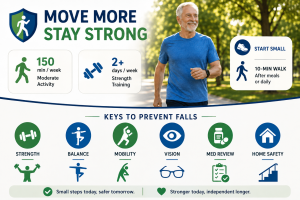
Regular movement is one of the most effective preventive tools available. A practical goal for many adults is at least 150 minutes a week of moderate-intensity activity, such as brisk walking, plus muscle-strengthening exercise at least two days a week.
If you are starting from zero, do not wait for the perfect plan. Start with a 10-minute walk after meals or a short daily walk, then build from there. For men in their 60s, 70s, and beyond, strength, balance, mobility, vision, footwear, medication review, and home safety become increasingly important for fall prevention.
Men’s Health by Decade
| Age Range | What to Review |
|---|---|
| 40s | Blood pressure, weight and waist size, cholesterol, diabetes risk, sleep, tobacco and alcohol use, depression, family history, vaccines, and early screening when family history or risk factors justify it. |
| 50s | Continue the basics. Confirm colorectal cancer screening. Assess lung cancer screening eligibility if there is a qualifying smoking history. Discuss PSA screening when appropriate. Review shingles and pneumococcal vaccines. |
| 60s | Continue chronic disease prevention and cancer screening based on risk and life expectancy. Pay greater attention to medication review, balance, falls, vision, hearing, sleep apnea, bone health risk, and functional strength. |
| 70s and beyond | Focus increasingly on function, mobility, fall prevention, cognition, medication burden, bone health, advance care planning, and individualized decisions about ongoing cancer screening. |
What to Bring to Your Annual Physical
- A list of prescription medicines, vitamins, supplements, and over-the-counter products.
- Your home blood pressure readings, if you monitor at home.
- Your family history of heart disease, diabetes, colon cancer, prostate cancer, and other major conditions.
- Your vaccine record, if available.
- Questions about sleep, mood, sexual health, urinary symptoms, exercise, alcohol, tobacco, and weight changes.
Artificial intelligence tools and online resources can help you organize your questions and understand medical terms. They do not replace a clinician who knows your history, performs an examination, interprets trends, and helps you make decisions in context.
Take Control of Your Health
Your numbers tell a story. Blood pressure, A1C, cholesterol, waist size, exercise habits, vaccine status, and screening history become much more useful when viewed together over time.
Schedule an annual physical near your birthday. Bring your questions. Know your numbers. Small preventive actions taken early can protect your independence and health for years to come.
At Shield Medical Group in Sebring and Lake Wales, Florida, we help adults 50 and older organize preventive care, manage chronic conditions, and make evidence-based health decisions. To schedule a visit, call (863) 236-9550.
Educational only; talk to your clinician.
Frequently Asked Questions
What are the most important health numbers for men?
Key numbers include blood pressure, hemoglobin A1C or fasting glucose, cholesterol values, body mass index, waist circumference, and weight trend. The right interpretation depends on your medical history and overall cardiovascular risk.
How often should men get a physical?
Many adults benefit from an annual preventive visit, especially after age 40 or when they have chronic conditions, medications, risk factors, or overdue screening needs. The frequency of lab testing and follow-up should be individualized.
What blood pressure should a man aim for?
For many adults, a blood pressure below 130/80 mm Hg is a common goal, but the appropriate target depends on age, medical history, medication tolerance, and cardiovascular risk. A clinician should interpret readings collected with proper technique.
At what age should men start colon cancer screening?
Average-risk adults should begin colorectal cancer screening at age 45. Earlier screening may be recommended if you have a family history of colorectal cancer, certain genetic conditions, inflammatory bowel disease, or other risk factors.
Should every man have a PSA test?
No. PSA screening is an individual decision. Men ages 55 to 69 should discuss potential benefits and harms with a clinician. Risk factors such as Black ancestry and a strong family history may make the discussion especially important.
How can I lower my risk of diabetes and heart disease?
Focus on a sustainable pattern: move regularly, include resistance training, avoid tobacco, limit alcohol, improve sleep, manage stress, eat more fiber-rich foods, reduce sugary drinks and highly processed carbohydrates, and work with your clinician to control blood pressure, cholesterol, and blood sugar.