
Think of chronic, low-grade inflammation like a home alarm humming quietly all day with no burglar in the house. An anti-inflammatory diet is not an official program or a single superfood. It is a way of eating across your whole week, and the pattern with the most trial evidence behind it is Mediterranean-style eating: vegetables, fruit, beans, whole grains, fish and olive oil. This guide explains what the research shows, what it does not show, which foods to add and limit, and how to start over four weeks on a real budget.
What is an anti-inflammatory diet?
There is no official anti-inflammatory diet. The term describes an overall eating pattern, and the best-studied example is the Mediterranean style of eating.
An alarm that rings for a good reason and then shuts off has done its job. Chronic, low-grade inflammation is closer to an alarm stuck on a low hum. That comparison is only a way to picture it, but it helps explain why no single food can switch it off.
Instead of hunting for one ingredient, look at your eating pattern: your breakfasts, snacks and weeknight dinners added together. Harvard's Nutrition Source describes the Mediterranean and DASH (Dietary Approaches to Stop Hypertension) diets as eating plans that already feature many anti-inflammatory foods, so you do not have to pick a side to follow an anti-inflammatory diet.
What the research shows about inflammation markers
Across 33 randomized controlled trials with 3,476 adults, Mediterranean-style eating lowered several blood markers of inflammation compared with control diets.
In a randomized controlled trial, chance decides who gets which diet, so the groups can be compared fairly. A 2026 meta-analysis pooled 33 of these trials and found lower high-sensitivity C-reactive protein (hs-CRP), interleukin-6 and interleukin-17 with the Mediterranean diet. Some other markers, including standard CRP and tumor necrosis factor-alpha, did not change significantly, and the authors called for more high-quality studies.
Think of hs-CRP as a rough volume reading on the alarm. It can show the sound going up or down, but it cannot tell you why the alarm is on. A lower lab number is useful, and it is also a modest claim. It does not predict how any one person will feel next month.
Beyond lab numbers: heart events
The same pattern has been tested against real heart outcomes. In the PREDIMED trial in Spain, 7,447 adults at high cardiovascular risk had fewer major heart and blood vessel events with a Mediterranean diet plus extra-virgin olive oil or mixed nuts than with a reduced-fat diet.
Major events (heart attack, stroke or death from cardiovascular causes) occurred in 3.8% of the olive oil group, 3.4% of the nuts group and 4.4% of the reduced-fat group over a median of 4.8 years. The trial was republished in 2018 after problems with how some participants were randomized; the corrected analysis still showed a lower risk.
Foods that reduce inflammation: build your plate
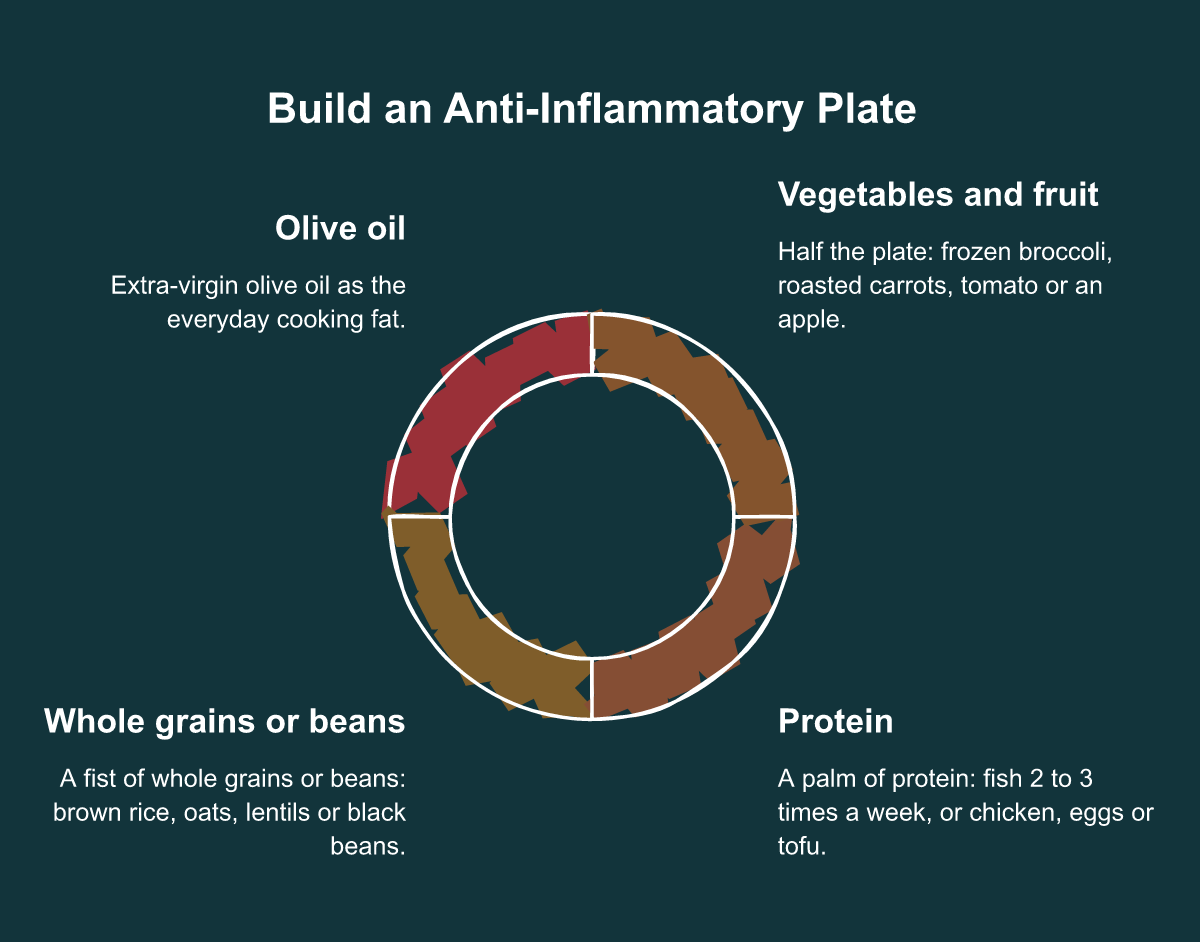
You can plan an anti-inflammatory diet with a dinner plate and your own hand: half vegetables and fruit, a palm of protein, a fist of whole grains or beans, and extra-virgin olive oil for cooking.
Fill half the plate with vegetables and fruit. It does not need to be fancy: frozen broccoli, roasted carrots, a sliced tomato or an apple all count.
Add a palm-sized portion of protein, such as chicken, eggs, tofu or fish. For adults, the FDA and EPA advise 2 to 3 servings a week of fish from their Best Choices list, with a serving of about 4 ounces. Salmon and sardines are good options, and canned, frozen and fresh all work.
Add a fist-sized portion of whole grains or beans, such as brown rice, barley, oats, lentils or black beans. Use extra-virgin olive oil as your everyday cooking fat, for roasting vegetables, warming garlic and greens, or a quick lemon dressing.
- Half the plate: vegetables and fruit
- A palm of protein: fish 2 to 3 times a week, or chicken, eggs, tofu
- A fist of whole grains or beans
- Extra-virgin olive oil as the default cooking fat
Sources: Diet Review: Anti-Inflammatory Diet (Harvard T.H. Chan School of Public Health, The Nutrition Source); Advice about Eating Fish (U.S. Food and Drug Administration)
A sample day
A normal day can be built from ordinary groceries with no specialty powders.
- Breakfast: oatmeal with frozen blueberries and a little ground flax
- Lunch: a big salad with chickpeas, tomato, cucumber, olive oil and lemon
- Snack: an apple with a small handful of almonds, or carrots with hummus
- Dinner: a sheet-pan salmon fillet with broccoli and a scoop of brown rice
Inflammatory foods to avoid, or at least limit
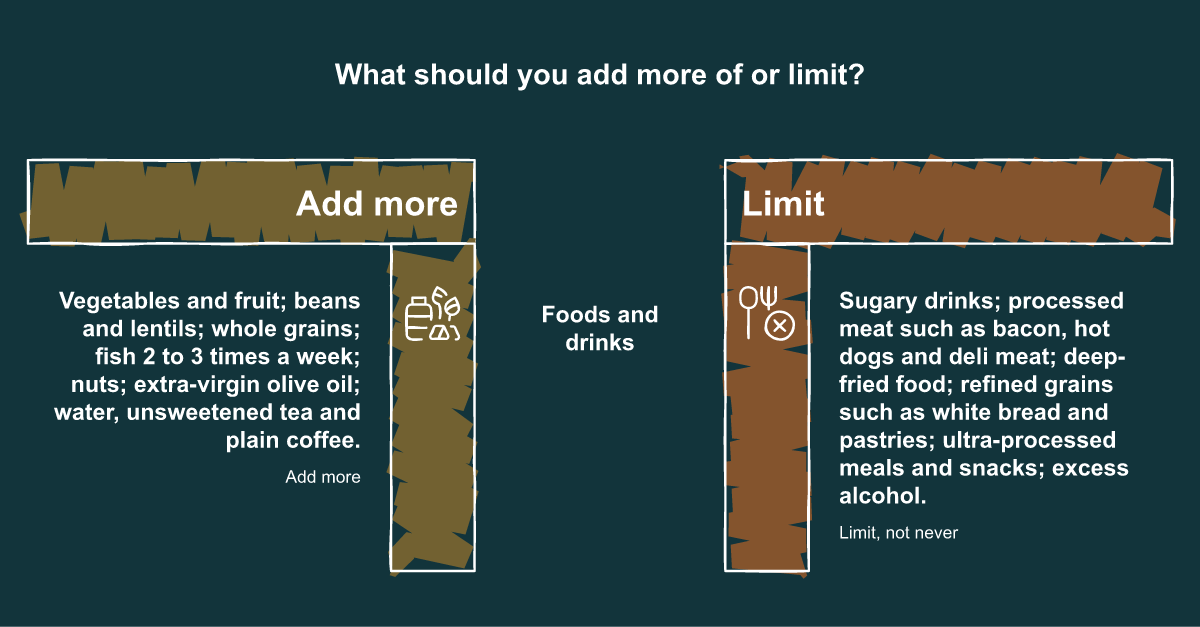
The limit list is short: sugary drinks, processed meat, deep-fried food, refined grains, ultra-processed meals and snacks, and excess alcohol. Limit leaves room for a slice of birthday cake.
- Sugary drinks
- Processed meat such as bacon, hot dogs and deli meat
- Deep-fried food
- Refined grains such as white bread and pastries
- Ultra-processed meals and snacks
- Excess alcohol
Sources: Diet Review: Anti-Inflammatory Diet (Harvard T.H. Chan School of Public Health, The Nutrition Source); Dietary Guidelines for Americans, 2025-2030 (USDA and HHS)
Sugar: whole fruit and sugary drinks are not the same
In controlled feeding trials, whole fruit lowered C-reactive protein in some comparisons, while sugar sources that included sugary drinks raised it.
A 2022 meta-analysis of 64 controlled feeding trials found that the food source of sugar mattered. An orange and a can of orange soda may both taste sweet, but they did not behave the same way in those trials.
In a separate analysis of large population studies, people who drank 1 to 2 sugary drinks a day had about a 26% higher risk of type 2 diabetes than people who drank less than one a month. That is a link, not proof that one caused the other, but a daily soda is a simple place to make a change.
Sources: Effect of Important Food Sources of Fructose-Containing Sugars on Inflammatory Biomarkers: Meta-Analysis of Controlled Feeding Trials (Nutrients, 2022); Sugar-Sweetened Beverages and Risk of Metabolic Syndrome and Type 2 Diabetes: A Meta-analysis (Diabetes Care, 2010)
What to drink instead
Water, unsweetened tea and plain coffee all fit. Watch what you stir in.
In a UK Biobank study of 26,729 adults who had liver MRI scans, tea drinkers had lower odds of liver fat and liver fibroinflammation, and coffee drinkers had lower odds of liver fat. This is an association, not proof.
The Dietary Guidelines for Americans, 2025-2030 say no amount of added sugar is recommended, and if you do have it, one meal should contain no more than 10 grams of added sugars.
Sources: Coffee and Tea Intake Is Inversely Associated With Hepatic Fat Deposition, Iron Deposition, and Fibroinflammation (Mol Nutr Food Res, 2025); Dietary Guidelines for Americans, 2025-2030 (USDA and HHS)
Ultra-processed food
In a tightly controlled NIH study, people ate about 500 more calories a day on an ultra-processed diet than on an unprocessed one.
Twenty adults stayed in a research unit so scientists could measure exactly what they ate. The meals offered were matched for calories, sugar, fat, fiber and sodium, and people could eat as much as they wanted. They ate about 508 more calories a day on the ultra-processed diet.
Red meat and processed meat
One meta-analysis of randomized trials found that red meat did not change C-reactive protein in adults without heart or metabolic disease over up to 16 weeks. Processed meat stays on the limit list for other reasons.
We limit processed meat because of cancer and cardiometabolic risk, meaning risk to your heart, blood vessels and blood sugar, rather than because of a single inflammation number. The Dietary Guidelines also recommend cutting back on highly processed foods.
Sources: Effects of Total Red Meat Intake on Glycemic Control and Inflammatory Biomarkers: A Meta-Analysis of Randomized Controlled Trials (Adv Nutr, 2021); Dietary Guidelines for Americans, 2025-2030 (USDA and HHS)
Your gut on an anti-inflammatory diet: fermented foods and fiber
In a small Stanford trial, people who ate more fermented foods had greater gut microbiome diversity and lower levels of inflammatory proteins.
Your microbiome is the community of tiny organisms living in your digestive tract. Diversity means how many different kinds live there. In the Stanford study, a 10-week diet high in fermented foods such as yogurt, kefir, sauerkraut and kimchi increased diversity, and 19 inflammatory proteins in the blood went down. It was a small trial, so hold the result loosely.
Try plain yogurt with fruit so you control the sugar, a little kefir in a smoothie, or a forkful of sauerkraut on a sandwich. If these are new to you, start small.
Fiber is the other half of gut health. In large reviews of observational studies, people who ate the most fiber and whole grains had 15 to 30% lower death rates and less heart disease, stroke and type 2 diabetes. That is a link, not proof of cause. Beans in soup, oats at breakfast, whole-grain bread instead of white, and a pear in your bag all add up.
One caution: plant-based is not automatically healthy. In a long-term study of women, a plant-based pattern that shifted toward refined grains, sweets and sugary drinks was linked to higher hs-CRP. Soda and white bread are plant-based too, but they do not fit the anti-inflammatory diet pattern described here.
Sources: Fermented-food diet increases microbiome diversity, decreases inflammatory proteins (Stanford Medicine, 2021); Carbohydrate quality and human health: a series of systematic reviews and meta-analyses (The Lancet, 2019); Change in Plant-Based Diet Quality Is Associated with Changes in Plasma Adiposity-Associated Biomarker Concentrations in Women (J Nutr, 2019)
Can you tell if your body is inflamed?
There is no reliable symptom list for chronic inflammation. The way to measure it is a blood test, and your own clinician can tell you whether testing makes sense for you.
C-reactive protein is made by the liver in response to inflammation. A high-sensitivity CRP test measures very small increases and is used to help estimate heart disease risk, while infections and injuries can also raise CRP, so results are read in context.
In one analysis of national survey data (NHANES 2015-2016), about 1 in 3 participants had an hs-CRP of 3 mg/L or higher.
Sources: C-Reactive Protein (CRP) Test (MedlinePlus, U.S. National Library of Medicine); Demographic, behavioral, dietary, and clinical predictors of high-sensitivity C-reactive protein: NHANES
Weight, fasting and blood sugar
Weight loss on its own lowers CRP modestly, intermittent fasting has not been shown to beat ordinary calorie reduction, and Mediterranean eating modestly improves blood sugar in type 2 diabetes.
Across 33 weight-loss studies, CRP fell by an average of about 0.13 mg/L for each kilogram lost. That is a small, steady effect, and it is one reason to see weight as one part of the picture.
A 2025 review of 20 trials comparing intermittent fasting with calorie restriction at the same calorie level concluded that intermittent fasting may be an alternative but is not superior. You do not need to skip breakfast to follow an anti-inflammatory diet.
In adults with type 2 diabetes, a 2025 meta-analysis of 11 randomized trials found Mediterranean diets lowered hemoglobin A1c, a measure of average blood sugar, by about 0.3 percentage points compared with control diets. That is modest and worth discussing at your next diabetes visit.
Expect changes over weeks to months, not over a weekend. Any plan that promises to reset your blood work by Monday is promising too much.
Sources: The effect of weight loss on C-reactive protein: a systematic review (Arch Intern Med, 2007); Is isocaloric intermittent fasting superior to calorie restriction? A systematic review and meta-analysis of RCTs (Nutr Metab Cardiovasc Dis, 2025); Impact of the Mediterranean Diet on Glycemic Control, BMI, Lipid Profile, and Blood Pressure in Type 2 Diabetes: A Meta-Analysis of RCTs (Nutrients, 2025)
Anti-inflammatory diet myths
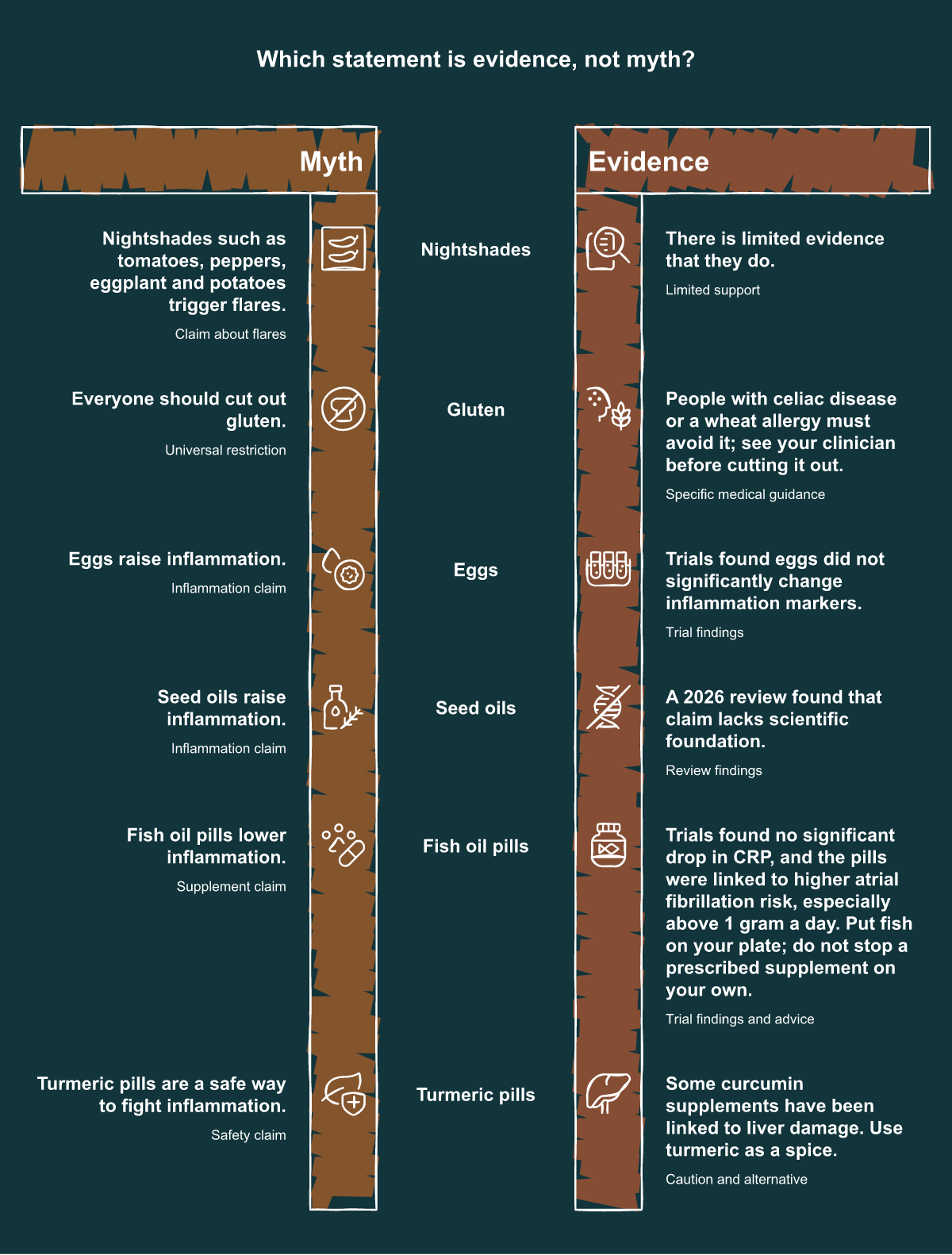
Many loud claims about an anti-inflammatory diet rest on thin evidence. The research points back to your overall plate, not to a single food to blame or a single pill to rescue you.
- Nightshades (tomatoes, peppers, eggplant, potatoes): Arthritis UK says there is no evidence that cutting foods out helps osteoarthritis, and the Arthritis Foundation notes limited evidence that nightshades trigger flares. If you enjoy tomato sauce and roasted peppers, this research gives you no reason to give them up.
- Gluten: people with celiac disease or a wheat allergy must avoid it. If you suspect celiac disease, see your clinician before you change what you eat.
- Eggs: a meta-analysis of randomized trials found egg intake did not significantly change hs-CRP, interleukin-6 or TNF-alpha.
- Seed oils such as canola and soybean oil: a 2026 review concluded that claims they raise inflammation are without scientific foundation. Canola oil is fine to use; extra-virgin olive oil stays the everyday default.
- Fish oil pills: in large trials, omega-3 supplements were linked to a higher risk of atrial fibrillation (an irregular heart rhythm), especially at doses above 1 gram a day, and a 2026 meta-analysis of nine small trials found omega-3 and omega-6 supplements did not significantly lower CRP or interleukin-6. Put fish on your plate. If you already take fish oil or it was prescribed, do not stop or change it on your own; bring the bottle to your next visit.
- Turmeric pills: turmeric is a lovely spice for lentil soup or roasted cauliflower. Supplements are different. NIH warns that highly absorbable curcumin products have been linked to liver damage and that turmeric supplements may be unsafe in pregnancy. Keep it in the spice rack.
Sources: Do any foods make arthritis worse? (Arthritis UK); Anti-Inflammatory Diet Do's and Don'ts (Arthritis Foundation); Effect of egg consumption on inflammatory markers: a systematic review and meta-analysis of randomized controlled clinical trials; Concerns about the health effects of industrially produced seed oils are without scientific foundation: a scoping narrative review (Crit Rev Food Sci Nutr, 2026); Effect of Long-Term Marine Omega-3 Fatty Acids Supplementation on the Risk of Atrial Fibrillation: A Systematic Review and Meta-Analysis (Circulation, 2021); Regulation of inflammation by omega-3 and omega-6 fatty acids: a meta-analysis of randomized trials (Front Nutr, 2026); Turmeric: Usefulness and Safety (NIH National Center for Complementary and Integrative Health)
An anti-inflammatory diet on a budget, plus a 4-week start
An anti-inflammatory diet can fit a real budget, though it may cost a bit more and take more prep. Four weeks is a good amount of time to get it rolling.
USDA's Thrifty Food Plan estimated a low-cost diet at about $59 a week for a woman and $74 a week for a man aged 20 to 50 in September 2026. In an NIH menu analysis, a minimally processed menu cost about 12% more per year than an ultra-processed menu and took more preparation. If this feels like more money and more work, you are not imagining it.
Helpful levers include frozen and canned produce, canned fish, dried or canned beans, oats, and cooking in batches.
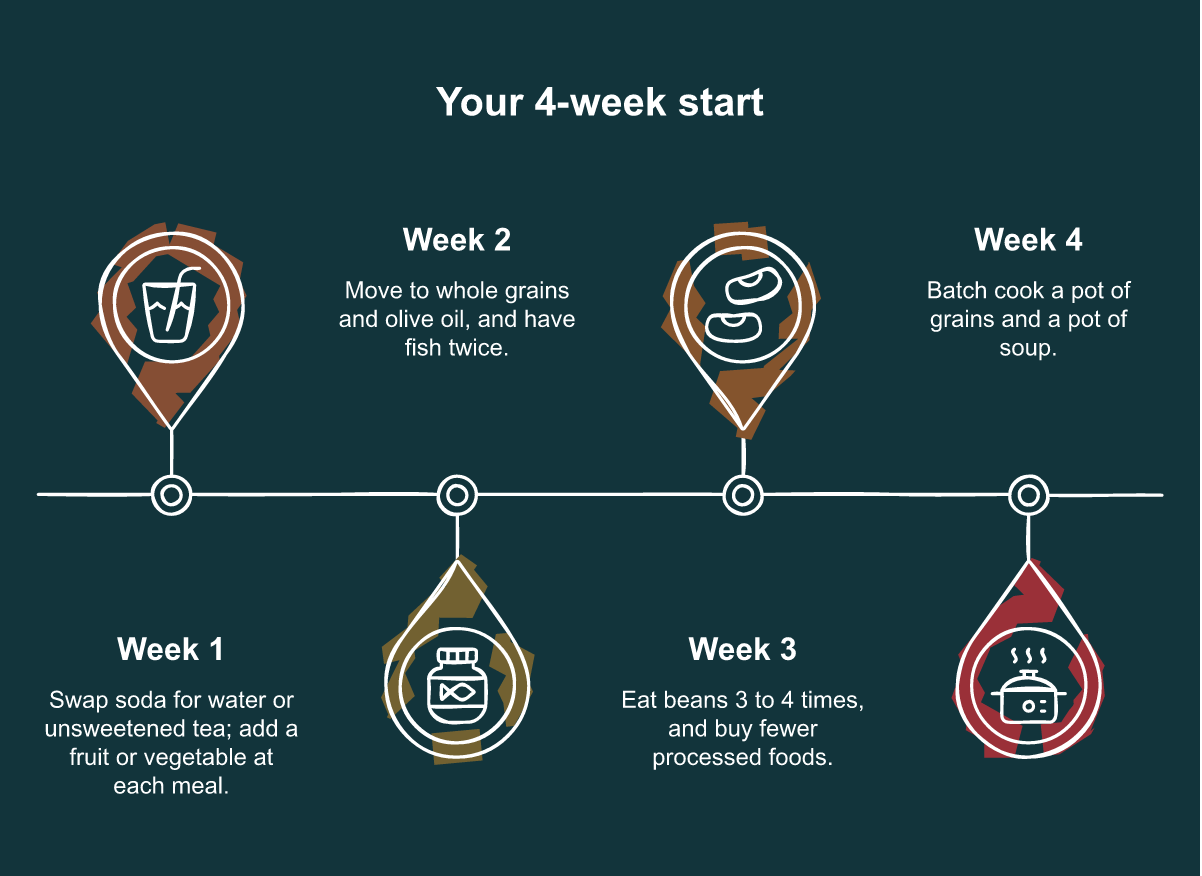
- Week 1: swap soda for water or unsweetened tea, and put a fruit or vegetable on the table at each meal
- Week 2: move to whole grains and olive oil, and have fish twice
- Week 3: eat beans 3 to 4 times, and buy fewer processed foods
- Week 4: batch cook a pot of grains and a pot of soup
Sources: Official USDA Thrifty Food Plan: U.S. Average, September 2026; Tradeoffs Between Convenience, Cost, and Healthy Eating Index for Menus Varying in Ultraprocessed Foods (J Nutr, 2026)
Who should check with a clinician before starting an anti-inflammatory diet
Some people need a different version of an anti-inflammatory diet. Talk with your own clinician before week one if any of these apply to you.
Your clinician knows your labs and your medicines. Please do not change any medicine or medical diet without talking with them first.
- Chronic kidney disease: kidney guidelines set different protein and sodium targets (for example, about 0.8 grams of protein per kilogram of body weight and about 2 grams of sodium a day for many people not on dialysis), while general dietary guidelines suggest 1.2 to 1.6 grams per kilogram. Dialysis needs differ, and your kidney team sets your plan.
- Warfarin: keep your vitamin K intake about the same each day, so avoid a sudden jump in leafy greens.
- Insulin or a sulfonylurea: keep carbohydrate intake consistent to lower the risk of low blood sugar, and ask your care team before making big changes.
- SGLT2 inhibitors: the FDA label lists a ketogenic diet among the factors that can contribute to ketoacidosis, a serious acid buildup in the blood, so avoid very-low-carb eating unless your clinician advises it.
- Pregnancy or breastfeeding: ask which fish to choose, and leave out turmeric pills.
- Food allergies: substitute within the anti-inflammatory diet pattern, such as beans in place of fish or seeds in place of nuts. The FDA lists nine major food allergens. Never test a food you know you are allergic to.
Sources: KDIGO 2024 CKD Guideline: Key Takeaways for People Living with CKD; Dietary Guidelines for Americans, 2025-2030 (USDA and HHS); Vitamin K: Fact Sheet for Consumers (NIH Office of Dietary Supplements); INVOKANA (canagliflozin) Prescribing Information, an SGLT2 inhibitor (FDA label, 2024); Advice about Eating Fish (U.S. Food and Drug Administration); Turmeric: Usefulness and Safety (NIH National Center for Complementary and Integrative Health); The FASTER Act: Sesame Is the Ninth Major Food Allergen (FDA)
Related: How The DASH Diet Might Save Your Heart Health
Related: The Amazing Benefits of Walking You Can't Ignore
Related: 15 Best Foods That Increase Blood Flow and Improve Circulation
Frequently asked questions
What are foods that reduce inflammation?
No single food does the job. The anti-inflammatory diet pattern with the best trial evidence is Mediterranean-style eating: vegetables and fruit, beans, whole grains, fish 2 to 3 times a week, nuts, and extra-virgin olive oil, which lowered several inflammation markers across 33 randomized trials.
What is the strongest anti-inflammatory diet?
No diet has been proven to be the strongest anti-inflammatory diet for everyone. The Mediterranean diet has the most trial evidence for lowering inflammation markers and, in the PREDIMED trial, fewer major heart events. DASH is another eating plan that features many of the same foods.
What can I drink to reduce inflammation?
Choose water, unsweetened tea or plain coffee instead of sugary drinks. Tea and coffee are linked with lower liver fat in imaging studies, though that is not proof, and sugar sources that included sugary drinks raised CRP in feeding trials.
How long does an anti-inflammatory diet take to work?
Expect weeks to months on an anti-inflammatory diet. Trials measured changes in blood markers over weeks to months, and weight loss lowers CRP gradually. No meal plan resets your blood work overnight.
References
- Mediterranean Diet Reduces Inflammation in Adults: A Systematic Review and Meta-analysis of Randomized Controlled Trials (Nutrition Reviews, 2026)
- Primary Prevention of Cardiovascular Disease with a Mediterranean Diet Supplemented with Extra-Virgin Olive Oil or Nuts (PREDIMED, N Engl J Med, 2018)
- Diet Review: Anti-Inflammatory Diet (Harvard T.H. Chan School of Public Health, The Nutrition Source)
- Advice about Eating Fish (U.S. Food and Drug Administration)
- Effect of Important Food Sources of Fructose-Containing Sugars on Inflammatory Biomarkers: Meta-Analysis of Controlled Feeding Trials (Nutrients, 2022)
- Sugar-Sweetened Beverages and Risk of Metabolic Syndrome and Type 2 Diabetes: A Meta-analysis (Diabetes Care, 2010)
- Coffee and Tea Intake Is Inversely Associated With Hepatic Fat Deposition, Iron Deposition, and Fibroinflammation (Mol Nutr Food Res, 2025)
- Dietary Guidelines for Americans, 2025-2030 (USDA and HHS)
- Ultra-Processed Diets Cause Excess Calorie Intake and Weight Gain: An Inpatient Randomized Controlled Trial (Cell Metabolism, 2019)
- Effects of Total Red Meat Intake on Glycemic Control and Inflammatory Biomarkers: A Meta-Analysis of Randomized Controlled Trials (Adv Nutr, 2021)
- Fermented-food diet increases microbiome diversity, decreases inflammatory proteins (Stanford Medicine, 2021)
- Carbohydrate quality and human health: a series of systematic reviews and meta-analyses (The Lancet, 2019)
- Change in Plant-Based Diet Quality Is Associated with Changes in Plasma Adiposity-Associated Biomarker Concentrations in Women (J Nutr, 2019)
- Demographic, behavioral, dietary, and clinical predictors of high-sensitivity C-reactive protein: NHANES
- C-Reactive Protein (CRP) Test (MedlinePlus, U.S. National Library of Medicine)
- The effect of weight loss on C-reactive protein: a systematic review (Arch Intern Med, 2007)
- Is isocaloric intermittent fasting superior to calorie restriction? A systematic review and meta-analysis of RCTs (Nutr Metab Cardiovasc Dis, 2025)
- Impact of the Mediterranean Diet on Glycemic Control, BMI, Lipid Profile, and Blood Pressure in Type 2 Diabetes: A Meta-Analysis of RCTs (Nutrients, 2025)
- Do any foods make arthritis worse? (Arthritis UK)
- Effect of egg consumption on inflammatory markers: a systematic review and meta-analysis of randomized controlled clinical trials
- Concerns about the health effects of industrially produced seed oils are without scientific foundation: a scoping narrative review (Crit Rev Food Sci Nutr, 2026)
- Effect of Long-Term Marine Omega-3 Fatty Acids Supplementation on the Risk of Atrial Fibrillation: A Systematic Review and Meta-Analysis (Circulation, 2021)
- Regulation of inflammation by omega-3 and omega-6 fatty acids: a meta-analysis of randomized trials (Front Nutr, 2026)
- Turmeric: Usefulness and Safety (NIH National Center for Complementary and Integrative Health)
- Official USDA Thrifty Food Plan: U.S. Average, September 2026
- Tradeoffs Between Convenience, Cost, and Healthy Eating Index for Menus Varying in Ultraprocessed Foods (J Nutr, 2026)
- KDIGO 2024 CKD Guideline: Key Takeaways for People Living with CKD
- Vitamin K: Fact Sheet for Consumers (NIH Office of Dietary Supplements)
- INVOKANA (canagliflozin) Prescribing Information, an SGLT2 inhibitor (FDA label, 2024)
- The FASTER Act: Sesame Is the Ninth Major Food Allergen (FDA)
- Anti-Inflammatory Diet Do's and Don'ts (Arthritis Foundation)
Educational only; talk to your clinician. This article is general health education, not medical advice, diagnosis or treatment.