If you’ve ever wondered why your lower abs feel impossible to train, you’re definitely not alone.
A lot of people—especially if you’re just starting out—can feel regular crunches hit the upper part of the stomach, but not so much down low. Then you try leg raises, and all you get is hip flexor or back fatigue. Sound familiar?
Thankfully, building up your lower abs isn’t about endless crunches, fancy gym machines, or marathon workouts. What actually works: picking the right moves, getting your form dialed in, and steadily making things harder as your core adapts.
What Are the Lower Abs, Anyway?
When people say “lower abs,” they’re usually talking about the lower section of the rectus abdominis—the strip of muscle that forms a six-pack if you’re lean enough.
But your core’s much bigger than that. It’s got the obliques, plus deeper muscles that help keep your spine, trunk, and pelvis steady.
You can’t truly isolate “just” your lower abs, but you can pick moves that challenge that area more by making your pelvis and legs work together. Think: reverse crunches, leg lowers, heel taps, hanging knee raises, flutter kicks, and dead bugs.
The trick isn’t just swinging your legs around, but keeping your core tight and controlled the whole time.
How to Actually Hit Your Lower Abs
First thing: learn to brace your core.
Lie on your back, knees bent, and imagine tensing up your stomach like you’re about to get poked. Now gently tilt your pelvis so your lower back presses closer to the floor—but don’t hold your breath.
Keep that braced feeling during lower-ab moves like heel taps and leg lowers.
One golden rule: if your lower back starts peeling way off the floor, back off the range of motion. You don’t need your legs an inch off the ground. Stop where you lose control. Short, careful reps are way better than big, sloppy ones.
10 Best Lower Ab Exercises
There’s no single “best” move for everyone. Where you start depends on your current strength, so be honest and begin with beginner-friendly moves before chasing the advanced stuff.
1. Reverse Crunch
Great for learning to use your abs to curl your hips off the floor.
How: Lie down, knees bent. Bring knees over hips, brace your stomach, and curl your pelvis toward your ribs. Hips lift a bit, then return to start. Aim for 2–3 sets of 8–12 smooth reps. Focus on control, not momentum.
2. Dead Bug
Awesome for teaching core control while arms and legs move.
How: On your back, knees up, arms pointing at the ceiling. Extend one leg and the opposite arm slowly, then switch. Go for 2–3 sets of 6–10 per side. If your back arches, don’t reach as far.
3. Heel Taps
Perfect starter move if you’re not ready for leg raises yet.
How: Lie on your back, knees bent at 90°, feet up. Brace your core, move one heel down to tap the floor, then switch. Try 10–16 reps, alternating. Stay slow and really feel the core working.
4. Single-Leg Lowers
Good step up from heel taps.
How: Both legs raised, drop one while the other stays up. Don’t go so low your back arches—then switch. Aim for 8–12 per side.
5. Leg Lowers
A classic and often challenging ab move.
How: On your back, legs pointing up. Brace your core, lower both legs (but only as far as you stay in control), raise back up. Do 2–3 sets of 8–12. Bend your knees to make it easier; slow the lowering to make it harder.
6. Flutter Kicks
Builds endurance and core tension.
How: Lie down, feet just off the floor, core tight. Small, alternating up-and-down kicks. Start with 15–20 seconds, build up over time. If you feel your back, raise your legs or stick to easier moves.
7. Mountain Climbers
Gets your whole body working with your core.
How: From high plank, drive one knee forward, switch legs. Don’t rush—going slower with control does more for your abs. Try 20–40 seconds.
8. Seated Leg Tuck
Targets your core while sitting.
How: Sit on the ground or bench, lean back, hands beside you. Legs out, then tuck knees to chest. Go for 8–15 slow, steady reps. Don’t rock backward.
9. Hanging Knee Raise
A solid challenge when the basics feel easy.
How: Hang from a pull-up bar, slowly bring knees up to chest. No swinging. Try for 6–12 controlled reps. Your hands may tire first—don’t worry, that gets better.
10. Dragon Flags
One of the hardest moves out there—definitely not for beginners.
You need real-deal core strength for these. Master reverse crunches, leg raises, hanging knee raises, hollow holds, and negative dragon flags before even trying a full rep. Doing tough exercises badly doesn’t help.
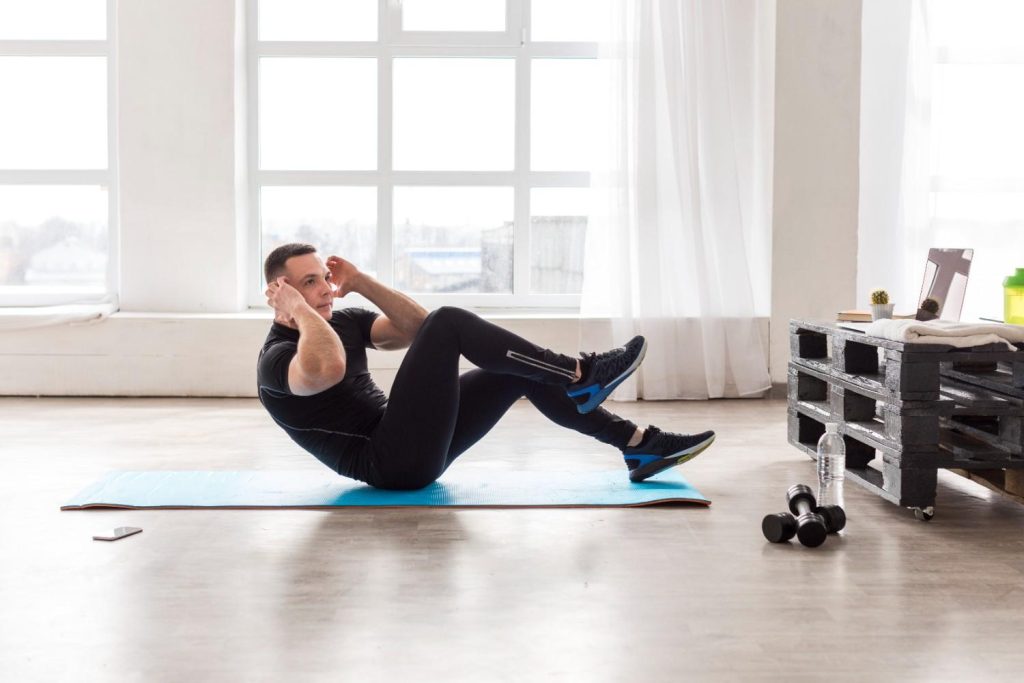
10-Minute Beginner Lower Ab Workout
You don’t need all ten exercises at once. A simple, consistent routine usually works better:
– Reverse Crunch: 10 reps
– Dead Bug: 8 per side
– Heel Taps: 10–12 per side
– Slow Mountain Climbers: 20–30 seconds
Rest 20–30 seconds between moves. After finishing the four, rest a minute, then repeat 2–3 times. If you’re brand new, start with two rounds.
Lower Ab Exercises—No Equipment Needed
One of the best things about lower ab training: you can do it anywhere, no fancy gear required. Moves like reverse crunches, dead bugs, heel taps, leg lowers, flutter kicks, mountain climbers, and seated leg tucks—just use your own bodyweight. An exercise mat helps if the floor’s hard.
Making Lower Ab Workouts Harder With Weights
After mastering bodyweight moves, start adding resistance to raise the challenge. That might mean weighted dead bugs, cables, or weighted reverse crunches. Progression matters—get perfect at the basic version before adding more load. If you start losing form, feeling your back arch, or swinging, drop the weight.
How Often to Train Your Lower Abs
For most beginners, two or three solid core sessions a week is plenty. Abs need recovery like every other muscle. For overall fitness, the CDC recommends that adults get at least 150 minutes of moderate-intensity physical activity each week and muscle-strengthening activity on at least two days. A simple schedule: Monday—lower ab workout, Wednesday—full-body training, Friday—lower abs again. Your core actually works during lots of other moves too—like squats, push-ups, and carries—so don’t overthink “ab day.”
How Many Sets and Reps?
A good beginner guideline:
- 2–3 sets per exercise
- 8–15 reps for slow, controlled moves
- 15–30 seconds for timed efforts
Stop when you can’t keep good form. To make progress, add reps, slow the movement, increase range, or try a harder move. Don’t stress about hitting exact numbers every time.
Can Lower Ab Exercises Burn Stubborn Belly Fat?
This is where a lot of people get confused. Ab workouts make your muscles stronger. But hammering lower-ab moves doesn’t “burn” fat from that exact spot. Losing belly fat comes from overall calorie burn, what you eat, activity, genetics, sleep—everything.
If you want visible abs, you need a combo: resistance training for the whole body, moving more overall, eating well, enough protein, good sleep. Think of ab moves as the way to build and reveal strong muscle—not as a magic fat eraser.
How Do You Get Lower Abs to Show?
You’ve already got them! The real question: how do you make them visible? It comes down to strengthening those muscles and lowering overall body fat. Genetics matter, too—some folks get that “V” cut easier than others. Focus on your own progress, not copying someone else’s six-pack.
Common Mistakes With Lower Ab Workouts
Arching Your Back: Happens a lot with leg raises. If you can’t keep your lower back down, bend your knees or work in a smaller range.
Using Momentum: Swinging legs feels easier but hits your core less. Move with control—slow is better.
Doing Too Many Reps: Quality beats quantity every time. Ten careful reps work better than fifty sloppy ones.
Jumping to Hard Moves: You don’t need to start with dragon flags or hanging leg raises. Get good at basics first.
Holding Your Breath: Don’t forget to breathe. Try exhaling gently during the hardest part of each rep.
What If Lower Ab Moves Hurt My Back?
If something hurts in the wrong way—sharp, shooting, worsening pain—stop. For more comfortable options, try dead bugs, heel taps, bent-knee reverse crunches, or limited-range single-leg lowers. Never force yourself through pain just because someone online said it’s the “best” move. If you have consistent issues or an injury, talk to a healthcare pro before changing your routine.
Quick Answers: Lower Abs FAQ
Q. Best lower ab workout for beginners?
Try reverse crunches, dead bugs, heel taps, controlled leg lowers.
Q. Which moves work lower abs?
Go for reverse crunches, heel taps, leg lowers, flutter kicks, mountain climbers, hanging knee or leg raises.
Q. Best lower ab exercise for women?
No need for separate moves—reverse crunches, dead bugs, heel taps, and leg lowers work great for everyone. Adjust difficulty to your level.
Q. Can you train lower abs every day?
Most beginners don’t need to. Two or three focused sessions a week is plenty.
Q. Easiest lower ab exercises?
Dead bugs, heel taps, bent-knee reverse crunches, single-leg lowers—solid beginner picks.
Q. How long should a session last?
Ten to fifteen minutes is enough—you don’t need an hour.
Q. Are dragon flags effective?
They’re awesome once you have enough strength, but too advanced for most new lifters. Master the basics first.
Final Thoughts
The best lower ab workouts aren’t the most complicated or hardest—they’re the ones you can do well, stick to, and gradually make more challenging.
If you’re new, keep it simple: dead bugs, heel taps, reverse crunches. Add in leg lowers, hanging knee raises, and (way later) dragon flags as you build up. Two or three short, focused sessions a week, moving with control, beats hours of random crunches every time.
You don’t need fancy equipment or a super-complex plan. Keep it consistent. Your core will thank you.