
Key Highlights
- Long COVID is when you have covid symptoms for three months or more after the first covid infection.
- Some of the most common symptoms of long COVID are feeling very tired, having shortness of breath, and brain fog.
- To manage this chronic COVID, you treat the symptoms because there is no single cure for it.
- Your mental health can also get worse. A lot of people feel more anxiety and depression.
- A few risk factors can make it more likely you get long COVID. These include how severe your initial illness was.

Introduction
Have you gotten better from your first COVID-19 infection, but you still don’t feel right? You could be dealing with long COVID. This is when covid symptoms stay for months or sometimes years after the sickness starts. A wide range of issues can come with this, and that’s hard to deal with. The first important thing is to really understand what this long covid means. You can get help by working with your health care team. They will support you during the slow recovery, and help you find ways to feel better each day as you heal.
Common Symptoms Seen in Long COVID
The wide range of long COVID symptoms means that people feel very different things. It’s not common for two people to have the same journey with long COVID symptoms. You may get just one or two ongoing symptoms, or you may feel a mix of several covid symptoms that change your daily life.
The most common symptoms of long covid are feeling tired all the time and having shortness of breath. But the range of symptoms of long covid can be much bigger. There are many other changes the body can feel. These can affect both your body and your mind. Let’s look at what physical and brain-related problems you might get.
Recovery Phases and Expected Duration
Getting better after long COVID does not always happen in a simple way. There are a few main stages in the recovery process. But each person can feel a bit different from others. For most people who have ongoing symptoms, there will be good progress in the first three months.
Some people may take up to six months or even longer to see improvement. There are people who say they still feel symptoms for around 12 to 18 months before getting better all the time. While you go through recovery, your symptoms can change. It is important for you to work with your health care provider to help manage these symptoms.
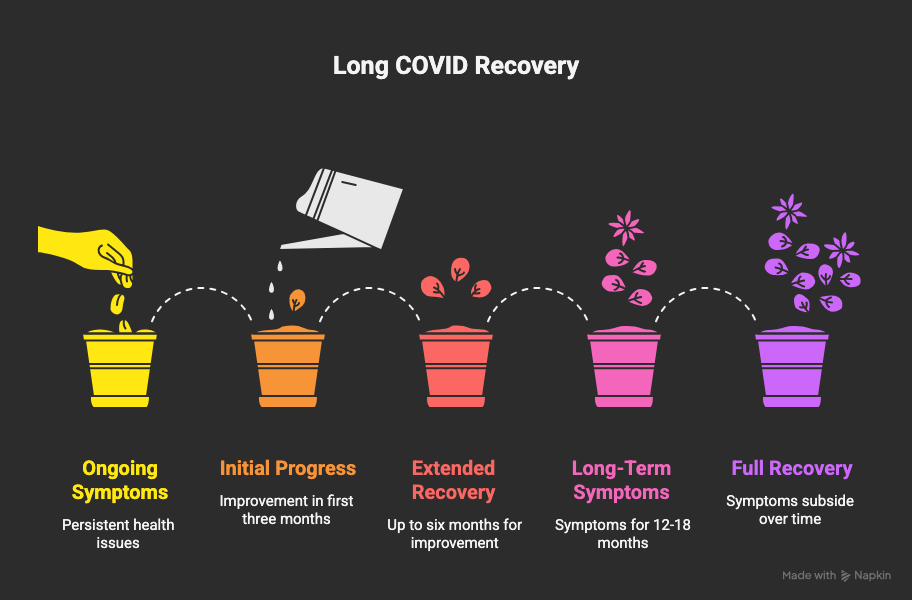
Here is a general look at the timeline:
|
Recovery Phase |
Typical Duration |
What to Expect |
|---|---|---|
|
Early Long COVID |
Up to 3 months |
Symptoms are often most intense; many see improvement during this time. |
|
Extended Long COVID |
3-6 months |
Gradual improvement may continue, though symptoms can still flare up. |
|
Prolonged Recovery |
6-18+ months |
Symptoms may become more manageable, but full recovery can be slow. |
Risk Factors That Increase Chances of Developing Long COVID
Some things can make you more likely to get long COVID. A big one is if you are not vaccinated for COVID-19. Getting the vaccine does not take away the risk completely. But it does make it lower.
How bad your first sickness was can change things. If you had a case of covid and needed to be in the hospital, your risk of getting long covid goes up. This is even more true if you were in an intensive care unit. But it is not only people who get really sick who might have long covid. People who have a mild case of covid can also get it.
Having some long-term health problems can make your risk go up. These risk factors include lung disease, obesity, diabetes, and high blood pressure. Studies say that people who are female and people in older adults may be more at risk too. The way your immune system works can also change your risk.
Management Strategies for Long COVID Symptoms
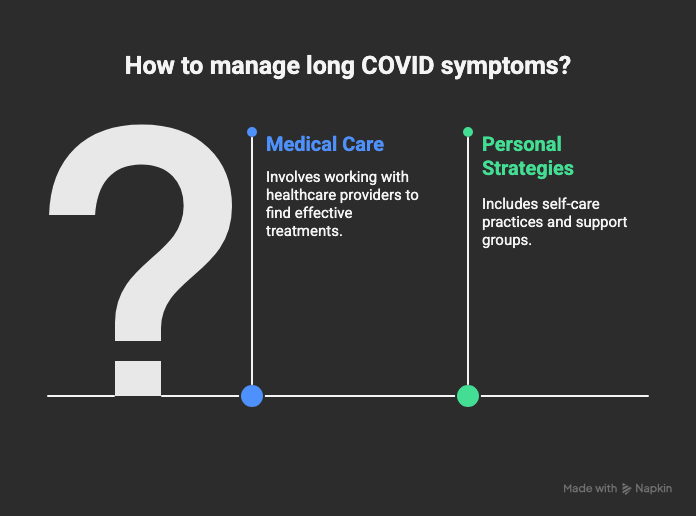
There is no one single treatment for long COVID. Managing it means trying to ease the symptoms you have. You need to work with your health care provider to see what works. For some people, it can take time and might need a few tries to find the best way to feel better. You and your health care provider have to keep communicating to handle long COVID in the right way.
There are a lot of things you can try, from medical care to things you do for yourself. Finding support groups is one good way to get help with the feelings and body changes. Now, let’s look at medical care and also personal ways that can help.
Conclusion
Long COVID can be tough for many people. The way it shows up, how long it lasts, and how you feel is different for each person. When you learn about long COVID and the symptoms, you can know more about what is going on. This helps you feel better about your choices and steps as you heal. The symptoms may stay awhile and happen for many reasons. You need to care for your body and your mind, because both are important when you try to feel better and live well. If you or someone you know has long COVID and finds it hard, allow yourself to reach out for help. A free consultation can help you learn how to feel better, look after your mental health, and improve your quality of life.
Frequently Asked Questions
How long does it typically take to recover from long COVID?
The time it takes to get better from long COVID is different for everyone. A lot of people feel their ongoing symptoms start to get better between 3 and 6 months after the initial infection. Some need 12 to 18 months, or even more, to feel good again. How fast you get well depends on your overall health and how bad your illness was.
Is ongoing fatigue normal in long COVID, and what causes it?
Yes, there is often strong and long-lasting tiredness in people with long covid. This is one of the main health problems that people get with it, and you may also see this in chronic fatigue syndrome. The exact reason for it is still being looked at. Many say it comes from a continued reaction by the immune system, some swelling in the body, or other changes caused by the virus.
What do healthcare professionals recommend for a smoother recovery?
Healthcare professionals say it helps to try more than one thing to feel better. They suggest talking with a health care provider to make a long COVID treatment plan that fits your needs. Try to care for yourself with rest. Take it slow. Join support groups for long COVID to get help from other people going through it. It also takes time to heal, so be patient with this recovery.