
🩺 By Dr. Kulmeet Kundlas, MD — Board-Certified Internal Medicine, Shield Medical Group
Are fermented foods good for you? Discover what gut science says about fermented foods for gut health, the microbiome, and a practical diet plan from Dr. Kundlas.
Are Fermented Foods Good for You? What Gut Science Really Says
Are fermented foods good for you? If you have ever stood in the grocery aisle staring at a jar of sauerkraut and wondered whether it was worth the purchase, you are not alone. The answer, backed by landmark clinical research from Stanford University and the American Gut Project, is a resounding yes — but only when you understand the science behind why they work and how to use them correctly. Every time you sit down for a meal, you are not just feeding yourself. You are hosting a banquet for over one hundred trillion microscopic guests living inside your digestive tract. And if you fail to feed those guests what they need, the consequences for your long-term health can be serious.
In this guide, we will walk through exactly how your gut microbiome forms, which bacteria are the heroes and villains, how fiber fermentation produces disease-fighting compounds, what modern habits are secretly destroying your microbial diversity, and — most importantly — a practical, food-first protocol to rebuild a healthy gut starting today.
How Your Gut Microbiome Forms — And Why It Matters for Nutrition
Humans are not born with a fully functioning ecosystem in their stomachs. The colonization of your gut begins the very second you enter the world, and the method of birth plays a surprisingly large role in shaping your early microbial landscape.
Vaginal Birth vs. C-Section
A baby born vaginally is immediately coated in bacteria from the mother’s vaginal canal and gastrointestinal tract. The anatomical proximity of the birth canal to the GI tract is not an evolutionary accident — it ensures the infant swallows a highly specific starter pack of maternal microbes. A baby born via C-section, by contrast, is first colonized by ambient bacteria found on skin surfaces and in the hospital environment. This represents a completely different microbial starting line.
Breast Milk: Feeding the Bugs
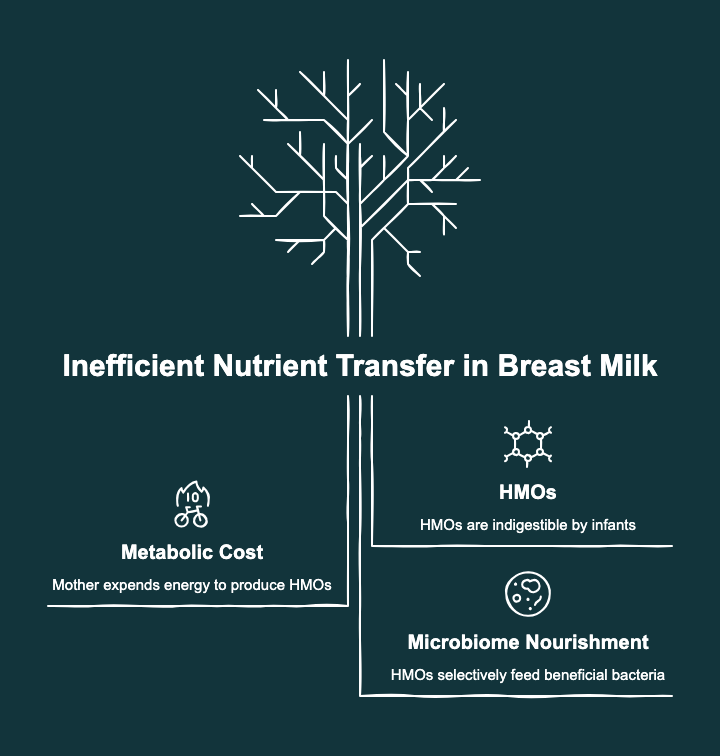
Breast milk contains complex carbohydrates called human milk oligosaccharides (HMOs). Here is the mind-bending part: human babies completely lack the enzymes to break down HMOs. The mother expends enormous metabolic energy producing these sugars, and the baby gets zero caloric benefit. Why? Because the mother is not feeding the infant — she is feeding the infant’s microbiome. HMOs selectively nourish beneficial strains like Bifidobacterium infantis, actively engineering the baby’s internal ecosystem from the very first feeding.
Can Adults Rebuild a Damaged Gut?
If you were a C-section baby, formula-fed, and raised in a hyper-sterile environment, are you doomed? The science provides a resounding no. While those first three years heavily influence early immune training and are linked to differences in childhood allergy and asthma risk, the adult microbiome is incredibly plastic. Over one hundred trillion microorganisms with incredibly short lifespans are constantly turning over, reproducing, and competing on an hourly basis. The ecosystem you possess today is profoundly shaped by what you are feeding it today, not just what happened decades ago. You have the agency to change it.
Heroes and Villains: The Gut Health Foods Your Microbiome Needs
If you want to build a thriving gut ecosystem — what researchers call a fiber-fermenting paradise — you need to know the specific microbial characters you are trying to cultivate and the ones you want to starve out.
The Microbial Heroes
- Faecalibacterium prausnitzii — The heavyweight champion. It makes up five to ten percent of a healthy adult’s total gut bacteria and is a master producer of butyrate, the ultimate anti-inflammatory fuel for your colon cells. Its populations are consistently depleted in patients with inflammatory bowel disease, type 2 diabetes, severe obesity, and colorectal cancer.
- Akkermansia muciniphila — This fascinating microbe fortifies the mucus lining of your gut by selectively grazing on its outer edge. Think of it like pruning a fruit tree: by trimming the branches, the tree grows back thicker and stronger. Akkermansia continuously signals goblet cells to secrete fresh, functional mucus, preventing the barrier from becoming stagnant and permeable. Clinical trials have shown that supplementing with Akkermansia can significantly improve insulin sensitivity and lower systemic cholesterol.
- Roseburia and Eubacterium rectale — Heavy-duty butyrate producers whose populations plummet on a highly processed diet devoid of complex plants.
- Bifidobacterium species — The reliable workhorses. They are the primary fermenters of fibers from oats and resistant starch but are notoriously fragile and easily wiped out by broad-spectrum antibiotics.
- Veillonella atypica — The marathon runner microbe. Researchers found this species enriched in the guts of elite marathon runners. It pulls fatigue-inducing lactate from the bloodstream, consumes it, and converts it into propionate — a short-chain fatty acid the body uses as fuel. When introduced into sedentary mice, it increased treadmill endurance by 13 percent. These are not passive hitchhikers; they are active biological hardware upgrades.
The Microbial Villains
- Bilophila wadsworthia — This bacterium thrives on a high-animal-fat diet and produces hydrogen sulfide, a toxic gas that damages human DNA, degrades the protective mucus layer, and is heavily implicated in triggering ulcerative colitis. Studies show its populations skyrocket within mere days of a heavy meat-and-dairy, zero-fiber diet.
- Enterococcus and Fusobacterium — Classic opportunists that bloom aggressively after broad-spectrum antibiotics wipe out the beneficial competition, rushing in to claim empty real estate and driving systemic inflammation.
How Fiber Fermentation Produces Butyrate — And Why It Matters for a Healthy Gut
When you chew and swallow dietary fiber — the tough, rigid cell walls of plants — your human digestive system is completely useless against it. You do not possess the enzymes required to break down cellulose or complex starches. Fiber is 100 percent indigestible to human cells. Microbiome researchers at Stanford coined the term microbiota-accessible carbohydrates (MACs) for these compounds. When you eat MACs, you are essentially a delivery vehicle, transporting these complex carbohydrates into the oxygen-free fermentation tanks of your large intestine.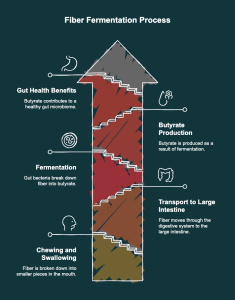
The Cross-Feeding Assembly Line
Fiber fermentation is not a solo act. It requires a coordinated, multi-stage process:
- Primary degraders (like certain Bacteroides species) act as microscopic lumberjacks. They possess specialized enzymes to chop massive, tough resistant starches into simple sugars and short oligosaccharides.
- Secondary fermenters (like Faecalibacterium and Roseburia) consume those leftover sugars and lactate. They cannot chop down raw fiber themselves, but they eagerly eat the sawdust and chopped logs.
- As the secondary fermenters feast, their biological waste products are short-chain fatty acids (SCFAs) — the molecular currency of health. The absolute superstar is butyrate.
Why Butyrate Is the Holy Grail
Your colon cells, called colonocytes, are metabolically bizarre. While almost every other cell in your body runs primarily on glucose, colonocytes pull roughly 70 percent of their energy directly from butyrate produced by the bacteria sitting next to them. If they do not receive bacterial waste, they do not eat.
When butyrate is abundant, colonocytes reinforce the tight junctions — the physical mortar between gut barrier cells — preventing pathogens from leaking into the bloodstream. This is the biological mechanism that prevents the leaky gut phenomenon described extensively in clinical literature.
But butyrate does more than structural repair. It acts as an HDAC inhibitor, which means it helps your DNA unspool and express powerful anti-inflammatory and anti-cancer genes. The waste product of a bacterium eating an oat literally reaches into human DNA and turns off cancer-promoting pathways.
Other SCFAs also travel beyond the colon. Propionate travels to the liver to regulate glucose metabolism and then to the brain, where it stimulates satiety hormones like GLP-1 and PYY — literally telling your brain to put the fork down. Acetate crosses the blood-brain barrier and helps regulate cholesterol synthesis and metabolic rate.
Are Fermented Foods Good for You? What the Stanford Study Proved About Gut Health Diet
Are fermented foods good for you according to hard clinical data? Researchers at the Stanford Sonnenburg Lab took healthy adults accustomed to a low-fiber Western diet and split them into two groups:
- Group 1: High Fiber — Drastically ramped up to over 40 grams of diverse plant fiber per day.
- Group 2: High Fermented Foods — Kept fiber relatively low but consumed six full servings of live fermented foods daily (kefir, unpasteurized sauerkraut, kimchi, authentic kombucha).
The fermented food group, on the other hand, absolutely thrived. Six daily servings of fermented foods for gut health resulted in a massive, rapid increase in overall microbial diversity. Their blood work showed dramatic reductions in 19 different inflammatory cytokines, including interleukin-6, a marker heavily implicated in chronic aging and autoimmune conditions.
The takeaway: You do not start by dumping fiber into an empty system. You seed the gut first with fermented foods to lower baseline inflammation, fight off opportunists, and open up ecological niches. Only once the soil is prepped do you slowly introduce the high-fiber fertilizer.
How to Improve Gut Health: A Practical Daily Protocol for a Fiber-Fermenting Paradise
Step 1: Seed the Soil with Fermented Foods
Begin incorporating daily servings of living, cultured foods:
- High-quality kefir
- Unpasteurized sauerkraut
- Traditional kimchi
- Authentic kombucha
- Full-fat plain yogurt with live cultures
Step 2: Aim for 30 Plants a Week
Data from the American Gut Project — one of the largest crowdsourced microbiome studies in history — found that the single greatest predictor of a robust, diverse gut microbiome was consuming 30 or more distinct plant species per week. This was more predictive than being vegan or paleo.
Step 3: Use a Slow Fiber Ramp-Up
Do not jump from the standard American average of 15 grams of fiber per day to 40 grams overnight. Add just 3 to 5 grams per week and start with gentle, highly soluble fibers:
- Kiwi fruit — Clinical trials show two whole kiwis per day can outperform over-the-counter laxatives for functional constipation while selectively feeding Faecalibacterium prausnitzii.
- Oats — The beta-glucan fiber in oats is soothing and highly fermentable.
- Psyllium husk — A viscous sponge that normalizes both constipation and diarrhea without the excessive gas that raw cruciferous vegetables produce.
Step 4: Add Polyphenol Pulses
Polyphenols are the complex defense chemicals that give berries their deep, vibrant colors. Most of these large molecules are not absorbed in the small intestine — they travel intact to the colon, where they act as highly selective premium fuel for Akkermansia.
Step 5: Use the Resistant Starch Hack
When you cook starchy foods like potatoes, white rice, or pasta, heat gelatinizes the starches, making them easy to digest and quick to spike blood sugar. But if you cool that cooked food in the refrigerator overnight, the starch physically changes structure through a process called retrogradation, converting into resistant starch type 3.
Step 6: Respect Circadian Rhythm
Your gut microbiome has its own 24-hour clock. Finish your last meal at least three hours before sleep. During this fasting window, the gut activates the migrating motor complex — an internal broom that sweeps residual food and lingering bacteria out of the small intestine. It also gives Akkermansia time to prune and repair the mucus layer undisturbed.
Additionally, take a gentle 10-minute walk after your main meals. This simple movement aids gastric emptying, helps clear glucose from the bloodstream, stabilizes blood sugar, and creates a calmer environment for your microbes. Talk to your doctor before making significant changes to your eating schedule, especially if you manage a chronic condition.
What Destroys Your Gut Microbiome — Foods Bad for Gut Microbiome Health
Ultra-Processed Foods (UPFs)
UPFs are loaded with emulsifiers — chemical compounds like carboxymethyl cellulose (CMC) and polysorbate 80 that force oil and water to bind. These additives are in ice cream, creamy dressings, oat milks, and commercial breads. They function as detergents inside your gut, literally scrubbing away the protective mucosal layer that separates your colon cells from trillions of bacteria.
Artificial Sweeteners
Non-nutritive sweeteners like saccharin, sucralose, and aspartame were long assumed to be metabolically inert. The landmark Suez study published in Cell proved otherwise. These chemicals exert a bacteriostatic effect, physically inhibiting beneficial bacteria from reproducing and altering their gene expression.
Antibiotics and PPIs
Broad-spectrum antibiotics are biological napalm — they cannot distinguish between a pathogen causing your infection and the Faecalibacterium producing your butyrate. Proton pump inhibitors (PPIs) for acid reflux shut down stomach acid production, disabling the biological security checkpoint that kills swallowed bacteria.
Chronic Stress and Sleep Deprivation
Chronic psychological stress triggers the fight-or-flight response, diverting blood flow away from the gut. This thins the protective mucus layer, weakens tight junctions, and creates a hostile environment that kills beneficial anaerobes. As Dr. Kundlas advises patients, managing stress is not a luxury — it is a biological necessity for gut health.
Medical Disclaimer: This content is for educational purposes only and does not constitute medical advice, diagnosis, or treatment. Always consult a qualified healthcare professional before making changes to your diet, supplement routine, or medication regimen.
Bottom Line: Are Fermented Foods Good for You?
So, are fermented foods good for you? For the vast majority of people, the answer is a confident yes. The clinical evidence shows that fermented foods good for you daily — like kefir, kimchi, and unpasteurized sauerkraut — raise microbial diversity and lower inflammation faster than fiber alone. Pair those fermented foods with 30 plants a week, a slow fiber ramp-up, and good sleep, and you give your gut microbiome everything it needs to thrive. If you have a chronic condition, ask your physician whether fermented foods good for you are the right first step for your gut health plan.